Gel baiting vs spraying for cockroaches comes down to one question: which cockroach do you have, and where is it hiding? Gel bait is the better choice for the small German cockroach that lives inside kitchen cabinets, hinges and appliances. A spray works better for the large American cockroach that walks in from drains, shafts and sewer chambers. Most Indian homes with a long-running problem need both, used in different places.
If a technician has ever sprayed your kitchen and the roaches were back in three weeks, or if you have squeezed a tube of gel behind the stove and seen no change, this guide explains why. It covers how each method kills, where each one fails, and how to tell what a pest control company is actually doing in your flat.
How a cockroach gel bait kills
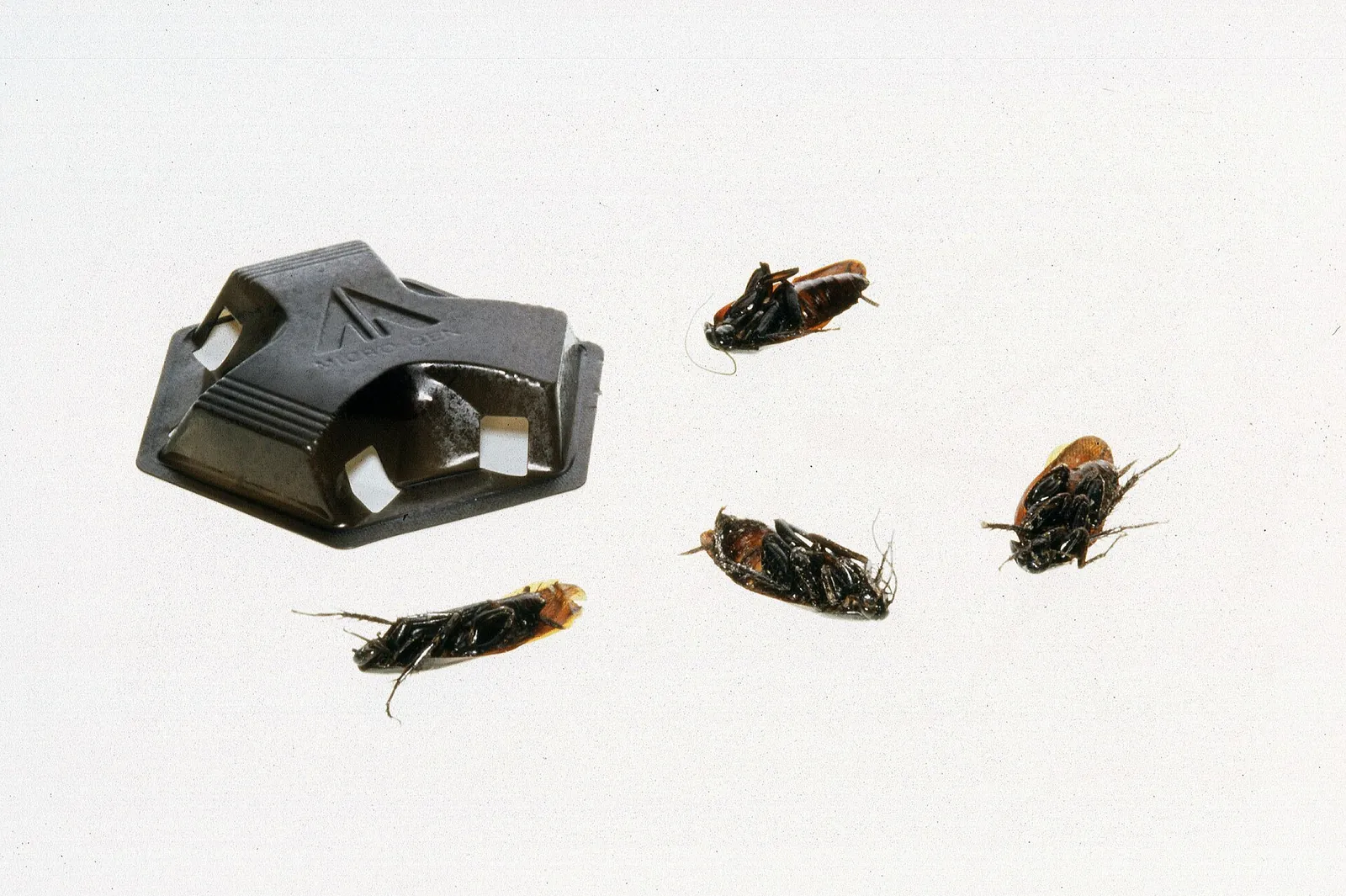
A gel bait is a soft paste of food attractant mixed with a slow-acting insecticide. In India the commonly registered actives are fipronil (often at 0.05 percent), imidacloprid (often at 2.15 percent) and indoxacarb. The cockroach eats the gel, walks back to its hiding gap, and dies there over the next several hours.
The clever part happens after death. Cockroaches eat each other's droppings, vomit and dead bodies, so a roach that ate the gel passes a lethal dose on to others in the same crack. This is called secondary kill, and it is the reason a few pea-sized dots can clear a cabinet colony that a spray never reaches. Nymphs that never leave the gap still get a dose this way.
- Gel works only if cockroaches find it before they find other food, so crumbs and oily stove tops undo it.
- It must be placed inside or right next to hiding gaps: hinge holes, the back of drawer runners, the motor area of the fridge, switchboard edges.
- Many small dots beat a few big blobs. A blob dries into a crust that roaches ignore.
- Results show in about one to two weeks, not overnight. Expect to see more roaches for a day or two as they come out to feed.
How a cockroach spray works
A professional spray is usually a synthetic pyrethroid such as cypermethrin, deltamethrin, lambda-cyhalothrin or bifenthrin, diluted in water and applied to surfaces with a hand pump. It is a contact poison: the insect must walk over the wet or dried film to pick up a dose. The film stays active for some weeks on undisturbed surfaces, which is why it is called a residual spray.
Spraying shines where cockroaches travel rather than where they nest. The American cockroach lives in the drainage chamber, comes up through the floor trap at night, and crosses the bathroom floor and the kitchen platform. A barrier of residual spray along that route, around floor traps, in the plumbing shaft and in the gully trap outside, catches it in transit. Gel does far less here because a drain roach has plenty of food in the sewer.
Why spraying a German cockroach kitchen often backfires
Pyrethroids have a repellent edge. When a German cockroach colony is sprayed, many of the insects simply move deeper into the cabinet carcass, into the microwave or behind the tiles, and the population splits into several new hiding spots. Spray residue on cabinet surfaces can also contaminate gel placed later, and roaches avoid bait that tastes of insecticide.
So the order matters. In a kitchen with German cockroaches, a good technician uses gel first and keeps spray away from the bait spots. If spray is needed for drain roaches, it goes on the floor trap area, the sink cabinet floor and the shaft, not inside the upper cabinets where gel was placed.
Gel or spray: side-by-side comparison
| Factor | Gel bait | Residual spray |
|---|---|---|
| Best target | German cockroach in cabinets and appliances | American cockroach coming from drains and shafts |
| How it kills | Eaten; spreads to others in the nest | Contact with treated surface |
| Speed | One to two weeks for a visible drop | Fast knockdown of roaches that cross it |
| Smell and mess | No smell; no need to empty the kitchen | Some smell; kitchen surfaces must be cleared |
| Re-entry | Usually immediate | Only after surfaces are fully dry |
| Common failure | Placed in the open, or competing food left out | Sprayed inside cabinets, scattering the colony |
Telling the two cockroaches apart before you choose
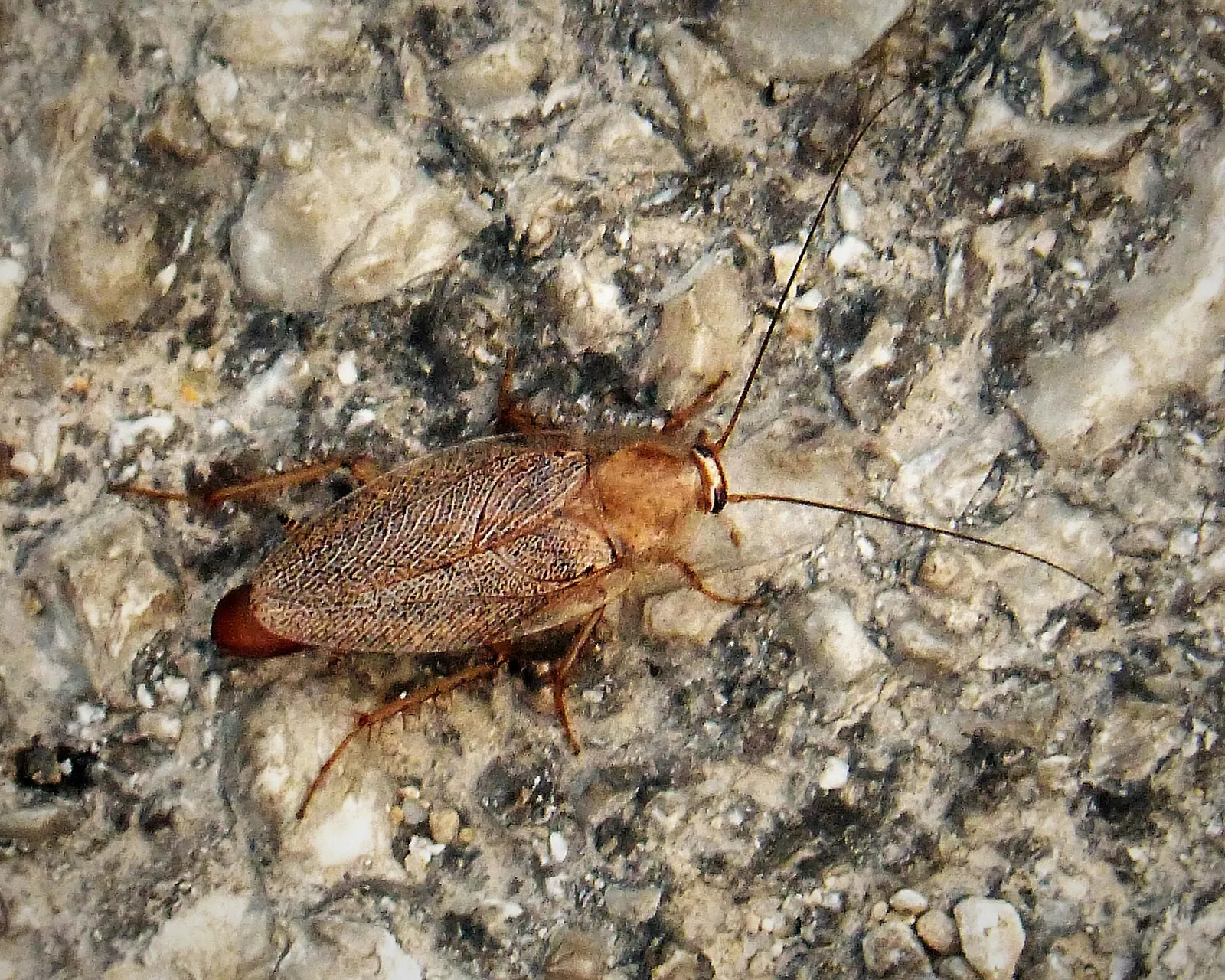
You do not need a microscope. The German cockroach is small, about 12 to 15 millimetres as an adult, light brown, with two dark stripes just behind the head. You see it in daytime in a bad infestation, mostly in the kitchen. The American cockroach is large, roughly 35 to 40 millimetres, reddish-brown, and it can glide a short distance. It turns up at night near the bathroom, the sink and the main door.
If you see both, which is common in older buildings and ground-floor flats, plan for gel in the kitchen and spray at the drains. Our wider guide on getting rid of cockroaches in an Indian home covers the sealing work that makes either treatment last longer.
What neither method fixes
Be honest with yourself about the building. No gel and no spray stops a cockroach that keeps arriving from a neighbour's flat through a shared riser, or from an open gap around the soil pipe under your sink. Treatment buys you a clean month or two; sealing buys you the year. A self-closing floor trap costs roughly ₹150 to ₹400 per drain fitted, and filling the pipe gap with sealant or cement mortar costs almost nothing.
Gel also struggles where food is everywhere. A kitchen with an open dustbin, dishes left overnight and an oily chimney filter gives the roaches better meals than the bait. Read why kitchen pests return again and again if this sounds familiar.
What to expect from a professional visit and its cost
A typical general cockroach and ant treatment for a 2BHK flat costs about ₹1,200 to ₹2,500 in 2026, with metro rates at the top of that range and smaller cities lower. These are typical ranges, not quotes. For that price you should get gel in the kitchen and a spray at drains and wet areas, plus a follow-up check or a second gel round within two to four weeks.
- Ask which active ingredient is in the gel and which is in the spray. A good company tells you without fuss.
- Ask where the spray will go. If the answer is 'everywhere, including inside cabinets', question it.
- Keep the kitchen clean and dry for the two weeks after gel goes down, and do not wipe the dots away.
- Do not spray a household aerosol over the gel spots. It ruins the bait.
Our checklist on preparing your home before a treatment explains what to empty and what to leave in place for each method.