Household pest control products in India fall into a few groups: gel baits and bait stations for cockroaches and ants, aerosol sprays for quick knockdown, liquid vaporisers, coils and mats for mosquitoes, skin repellents, rodent baits, and traps. Each works on a specific pest in a specific way. Gels usually give the best result for kitchen cockroaches, baits for ants, and mesh plus vaporisers for mosquitoes. Sprays kill what you can see but rarely solve an infestation. This guide compares them by active ingredient, not by brand.
Walk into any supermarket and you will find a whole shelf of tubes, cans, chalks, cakes and plug-ins, each claiming to finish the job. Most families buy two or three, use them in the wrong place, and conclude that nothing works. Knowing what is inside each pack and what it is designed to do saves money and lowers the risk to children and pets.
Read the label before anything else
Every insecticide sold legally in India should carry a registration number from the Central Insecticides Board and Registration Committee (CIB&RC), the active ingredient and its strength, directions for use, and first-aid advice. The label also carries a coloured diamond-shaped toxicity mark: green for the least toxic category, then blue, yellow and red for the most toxic. Household products are normally in the lower categories. A product without a registration number, such as some loose insecticide chalks sold on footpaths, is best avoided because you cannot know what it contains.
The main product types compared
| Product type | Common actives | Best for | Weak point |
|---|---|---|---|
| Cockroach gel bait | Fipronil, imidacloprid, indoxacarb | German cockroaches in kitchen cabinets | Fails if placed in the open or if food is left out |
| Ant bait (gel or station) | Fipronil, boric acid in sweet base | Ant trails in kitchens | Slow; killing ants on the trail undoes it |
| Aerosol crawling-insect spray | Pyrethroids such as cypermethrin, imiprothrin, prallethrin | Killing a visible cockroach or ant trail | Short effect; scatters cockroach colonies |
| Aerosol flying-insect spray | Pyrethroids such as prallethrin, transfluthrin | Quick knockdown of mosquitoes and flies | Residue in the air you breathe; effect ends quickly |
| Liquid vaporiser and mats | Transfluthrin, prallethrin, allethrin types | Mosquitoes in a closed bedroom | Needs a closed room; not for open balconies |
| Mosquito coils | Allethrin types | Outdoor sitting areas | Smoke indoors irritates lungs |
| Skin repellent creams and sprays | DEET and other registered repellents | Personal protection outdoors and in daytime | Must be reapplied; follow age guidance |
| Rodent bait cakes | Bromadiolone and other anticoagulants | Rats, in tamper-resistant stations | Dangerous to children and pets if left open |
Cockroach products: gels win, sprays support
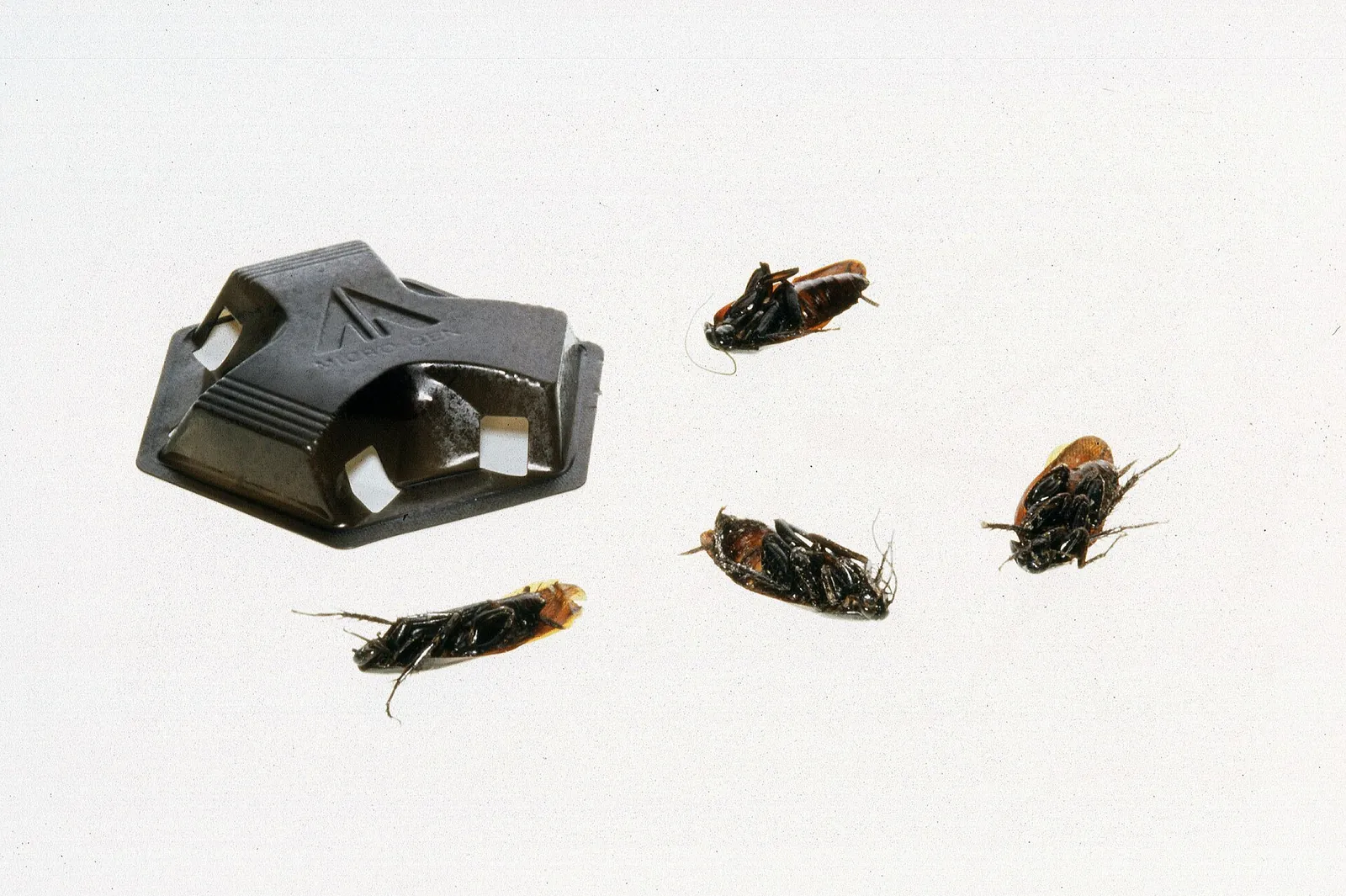
For the small German cockroach in the kitchen, a gel containing fipronil, imidacloprid or indoxacarb applied as many small dots inside hinge holes, drawer runners and appliance gaps will usually do more than any spray. Cockroaches eat it, return to their hiding place and spread it to others. Aerosol sprays are useful for the odd large cockroach that walks in from the bathroom at night, but spraying inside cabinets drives the colony deeper and spoils any gel there. For the large drain cockroach, the product that helps most is not a chemical at all: a self-closing floor trap, roughly ₹150 to ₹400 each fitted.
Ant products: let the workers carry it home
Ant baits work only if worker ants survive long enough to share the bait with the nest. That means you should not spray the trail you are trying to bait. Place the bait station or gel next to the trail, leave it for several days, and expect more ants at first. Grease-loving ants may ignore sweet baits, so if they do not take one, try a protein or oil-based bait instead. Wiping the trail with soapy water afterwards removes the scent path that guides new ants in. See our guide to getting rid of kitchen ants for good.
Mosquito products: protection, not elimination
Liquid vaporisers, mats and coils reduce biting in the room where they are used. They do not reduce the number of mosquitoes breeding around your home. Use vaporisers in a closed bedroom, with the door shut, and switch them off or move them once everyone is asleep if anyone wakes with a headache or a blocked nose. Avoid burning coils in small, closed rooms, especially where babies sleep or someone has asthma. Window mesh, typically ₹90 to ₹250 per square foot installed, and a bed net do the job without anything in the air. Skin repellents with DEET or other registered actives are the best option for daytime protection against dengue mosquitoes; follow the label for children.
Rodent baits and why they need extra care
Rodent bait cakes and blocks usually contain an anticoagulant such as bromadiolone, which stops blood from clotting. Rats die several days after eating it, which prevents the rest from linking the bait to the deaths. The same slow action makes accidental poisoning dangerous, because symptoms can appear days after a child or pet eats a piece. Always use baits inside a tamper-resistant box, never loose behind the fridge. Avoid acute rat poisons such as zinc phosphide at home. For a flat, professional rodent control typically costs ₹1,500 to ₹3,000. More in our guide on getting rid of rats and mice safely.
Products to skip
- Glue boards for rats and lizards: cruel, and they do not fix entry points.
- Naphthalene balls as a general repellent: they release a toxic vapour and do not keep cockroaches or lizards away.
- Unregistered insecticide chalks: unknown contents, and young children may eat them.
- Agricultural pesticides bought from farm shops: far too strong and not meant for living spaces.
- Aluminium phosphide or 'grain tablets': deadly gas, for licensed fumigators only.
- Ultrasonic plug-in repellers: no reliable evidence that they work.
Poisoning warning signs and what to do
Keep every product in its original container, locked away from children. If someone swallows a household insecticide or rat bait, inhales a lot of spray, or gets it in the eyes, watch for these signs.
- Nausea, vomiting, stomach pain or diarrhoea
- Dizziness, headache, unusual drowsiness or confusion
- Heavy sweating, drooling, watery eyes, small pupils or muscle twitching
- Cough, wheezing or difficulty breathing
- After rat bait: bleeding gums, nosebleeds, blood in urine or stools, or unusual bruising, which may start days later
- Fits or loss of consciousness
Go to the nearest hospital emergency department straight away, even if the person seems fine, and take the pack or a photo of the label. Do not make the person vomit and do not give milk, oil or home remedies. For skin contact, wash with soap and water; for eyes, rinse with clean water for several minutes. For a pet, go to a vet immediately. Parents of young children may also want to read our guide on pest control with children and pets at home.
When shop products are not enough
Household products can handle a light problem in one flat. If you see cockroaches in daylight, have used gel for a month without results, or the problem comes from shared drains, it is time for professional treatment. A general cockroach and ant service for a 2BHK typically costs ₹1,200 to ₹2,500 in 2026; these are typical ranges, not quotes.