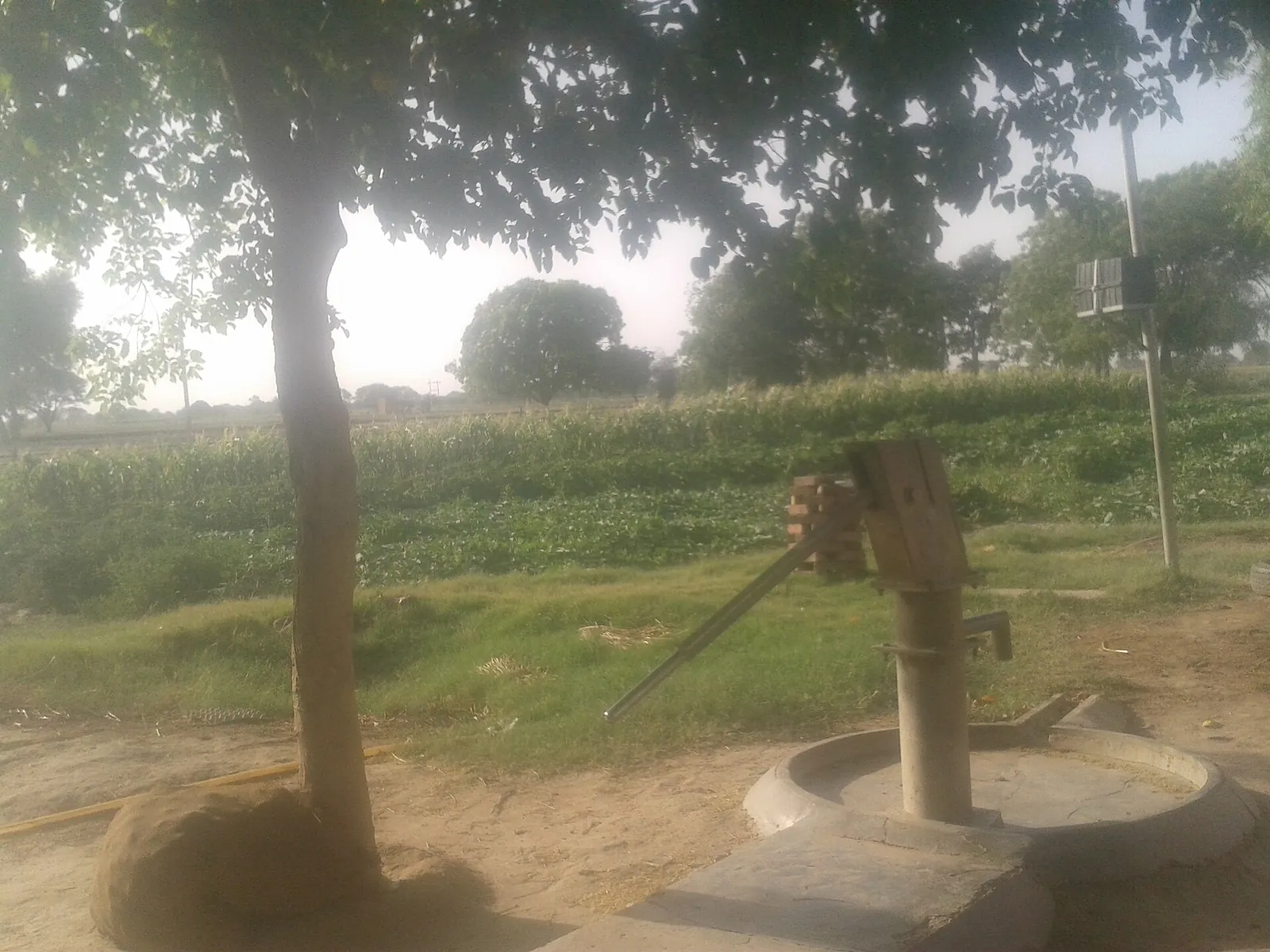
Yes, termite treatment is possible in a house with a well or borewell, but it has to be planned differently. The usual drilling-and-flooding approach puts liquid insecticide into the soil, and soil near a water source is exactly where you do not want chemicals moving. The practical answer is to keep liquid work well away from the well head, protect the well itself, and use bait stations in the zone closest to the water.
Many independent houses in Kerala, coastal Karnataka, Tamil Nadu, Goa and the outskirts of most cities still draw drinking water from a dug well or a borewell. The same houses tend to have gardens, wooden frames and soil contact around the plinth, which makes them classic termite targets. This article explains how to get the termites handled without worrying about your water every time you fill a glass.
Why a well changes the treatment plan
Anti-termite chemicals are designed to bind to soil and stay put. That is good news. But how far they travel depends on the soil type, how much water is used, and how high the water table sits. In sandy soil with a shallow water table, which describes much of coastal India, liquids move downward faster than in dense red or black clay.
An open dug well is the more sensitive case. It draws water from the upper layers of soil, and rain run-off can wash surface contamination straight in if the parapet is low or cracked. A borewell draws from deeper layers and has a casing pipe, so it is better protected, but the area around the casing can still channel water down if it is not sealed properly.
Is termite treatment possible with a well nearby? Practical distances
We are not aware of a single legal setback distance that applies to every home in India, and you should be wary of anyone who quotes one confidently. Local health authorities and the product label may carry their own guidance, so read the label and ask your panchayat or municipal office if you are unsure. What experienced operators do in practice looks like this.
| Distance from well or borewell | What most careful operators do | Why |
|---|---|---|
| Within roughly 3 metres | No liquid soil treatment. Bait stations only, plus wood treatment above ground. | Highest risk of liquid reaching the water. |
| Roughly 3 to 8 metres | Liquid treatment only at reduced volume, often with a repellent, or baiting instead | Depends heavily on soil and slope. |
| Beyond about 8 to 10 metres | Normal drilling and injection at label rate | Risk is low with standard practice. |
| Uphill of the well on a slope | Treat as closer than it measures | Run-off flows downhill toward the water. |
Treat these as working ranges, not rules. A well dug into loose laterite on a slope needs a bigger buffer than a cased borewell on flat clay ground. A good inspector will walk the site, look at the slope and drainage, and explain their buffer in writing.
Baiting: the safer option close to water
Bait stations are plastic cylinders pushed into the soil at intervals around the house. Each contains wood or cellulose that termites find and feed on. Once activity is confirmed, the technician adds a bait containing a growth regulator such as hexaflumuron, which stops termites from moulting. Workers carry it back to the colony and the population collapses over weeks to months.
The amount of active ingredient in a bait system is tiny and it sits inside a closed station, not sprayed into the soil. That makes it the natural choice for the strip of ground near a well. The downside is cost and patience. Baiting for an independent house typically runs ₹25,000 to ₹70,000 in the first year including monitoring, and results take longer than liquid treatment. These are typical ranges, not quotes. Our comparison of chemical and baiting methods sets out the trade-offs.
Protecting the well during the job
- Cover the open well with a tarpaulin or sheet tied over the parapet before any work starts, and keep it covered until the job is finished and the area has dried.
- Turn off the borewell pump during treatment so it is not drawing water while the soil is being wetted.
- Ask the technician to mix chemicals well away from the well, ideally on a hard surface on the far side of the house, and never to rinse tanks or sprayers anywhere near it.
- Check that the borewell casing has a concrete collar sealed to the ground. If there is a gap, have a mason fill it before treatment.
- Make sure the parapet of an open well is high enough, usually at least knee height, and has no cracks that let run-off in.
- Keep the treatment report, including the chemical name, quantity and where it was applied. This matters if you ever need to test the water.
Should you test the water afterwards?
If liquid chemicals were applied anywhere within about ten metres of the water source, a water test a few weeks after treatment gives peace of mind. Testing for specific pesticide residues needs a laboratory with the right equipment, so ask for a test that names the chemical used, not just a basic potability check. Some state public health laboratories and private labs accredited by NABL offer this. Prices vary widely, so call ahead.
A basic test for bacteria and hardness is cheaper and worth doing anyway once a year for any household well. It will not tell you about pesticides, though, so do not treat a clean basic report as proof.
What you can do yourself, and what you should leave alone
Plenty of the preventive work around a well is homeowner territory. Clear wood, cardboard and old bamboo away from the plinth. Fix dripping garden taps and keep water from pooling against the house wall. Raise wooden items off the soil on bricks or stone. Our guide to preventing termites as a homeowner covers this in more detail.
What you should not do is buy concentrate and pour it into the soil yourself. Homeowners tend to over-apply, and with a well nearby that is the one mistake you really do not want to make. Kerosene, diesel and used engine oil, which some people still pour on termite mounds, are worse than proper chemicals for groundwater and do not stop the colony anyway.
What this approach will not solve
Baiting near the well and liquid treatment further out is a sound plan, but it will not save timber that has already been hollowed. A door frame that sounds papery when tapped needs repair or replacement after the colony is under control. And if the house sits on a large field of termite mounds, as many rural plots do, new colonies can arrive from neighbouring land. A yearly inspection is part of living in such a house.
For a sense of overall budget, the figures in our termite cost breakdown are a fair guide. Independent houses typically fall between ₹15,000 and ₹40,000 for a whole-house liquid job, and a mixed plan with baiting near the well sits toward the upper end.