A monitor lizard near your home is almost always a Bengal monitor, a large, shy reptile that is far more afraid of you than you are of it. To keep a monitor lizard away from home safely and legally, you take away the reasons it visits, mainly rats, poultry, eggs and kitchen waste, close off the drains and gaps it hides in, and call the forest department if one is stuck inside or refuses to leave. You must never harm, catch or kill it, because the Bengal monitor has the highest level of protection under Indian wildlife law.
People often call it goh, ghorpad, udumbu or other local names. Whatever you call it, the advice is the same.
Is it really a monitor lizard?
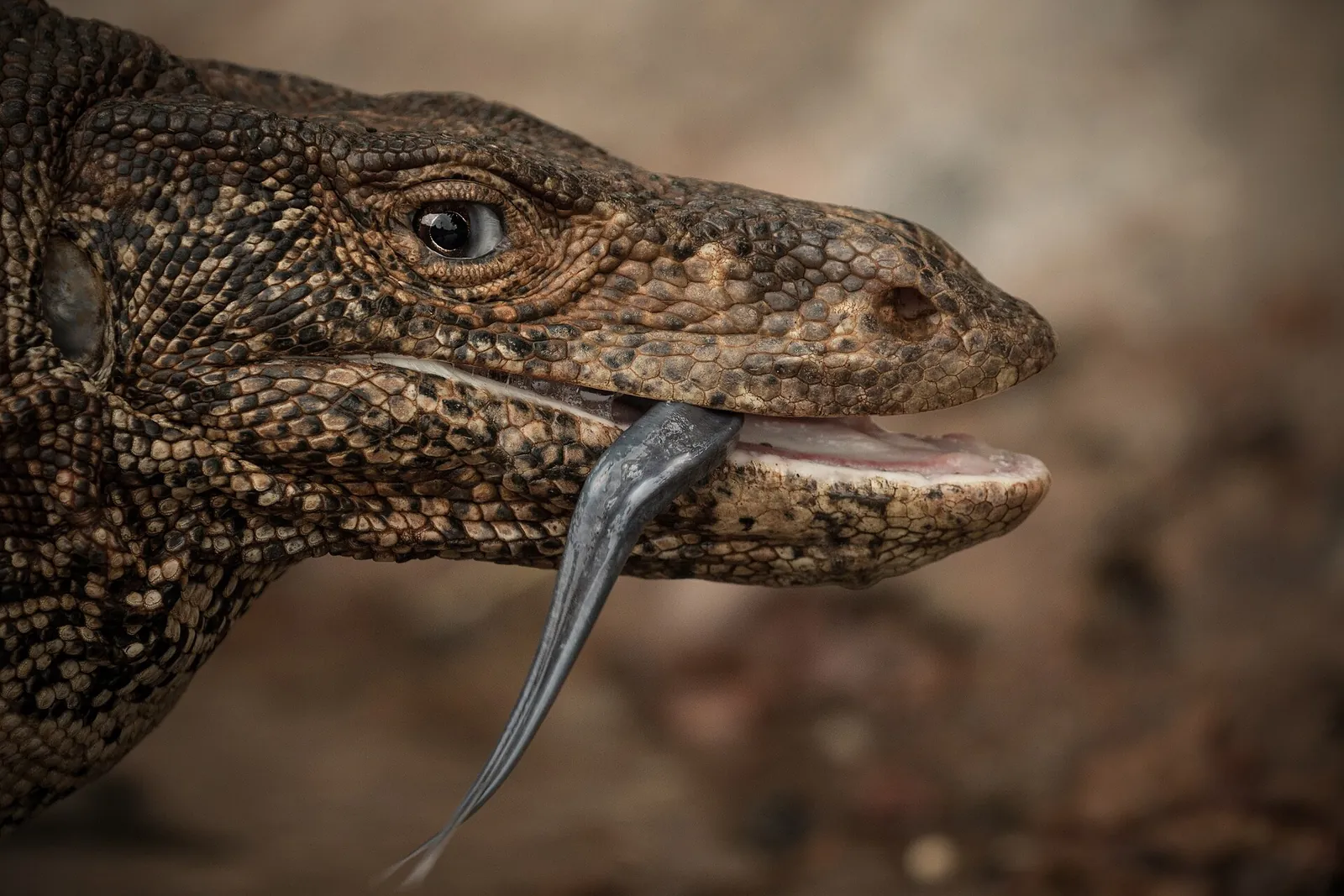
The Bengal monitor (Varanus bengalensis) can grow well over a metre long including its tail, which is longer than the body. Adults are greyish-brown or olive with faint speckles, while young ones are more boldly marked with bands and spots. It has a long neck, a pointed snout, strong legs with curved claws, and a forked tongue that it flicks constantly, rather like a snake.
Two other animals get confused with it. The common garden lizard, or oriental garden lizard, is small, has a crest on its neck and turns red on the throat during the breeding season. The house gecko is tiny and lives on walls. Neither is anywhere near the size of a monitor. If the animal you saw was big enough to scare a dog, it was probably a monitor.
Is a monitor lizard dangerous?
For people, not really. Monitors avoid humans and run for cover at the first sign of disturbance. They can bite, scratch with their claws and lash out with the tail if cornered or grabbed, and a bite can be painful and may get infected, so see a doctor if it happens. Bites mostly occur when someone tries to catch or corner one.
The real risk runs the other way. Monitors are hunted illegally for meat, for skin, and for body parts sold as lucky charms, and they are often killed by people who mistake them for a danger. Pets are another concern: a dog that attacks a monitor can be scratched or bitten, and a monitor will take chicks and eggs from a backyard coop.
The legal position, in plain words
The Bengal monitor is listed in Schedule I of the Wildlife (Protection) Act, 1972, the category that gives the strongest legal protection, alongside animals such as the tiger. Killing, capturing, keeping or trading one, or its parts, is a serious offence that can bring heavy fines and imprisonment. Selling charms said to be made from monitor parts is also illegal, and many of those sold are fake anyway.
The schedules were reorganised by an amendment in 2022, so if you need the precise current wording for a complaint or a dispute, ask your local forest office. For homeowners, the practical rule is simple: do not touch it, and let the forest department handle any removal.
Why monitor lizards come close to houses
| What draws it | Where you see it | What to change |
|---|---|---|
| Rats and bandicoots | Garbage areas, drains, compound walls | Rodent control and covered bins |
| Poultry, eggs, pet food | Backyard coops, verandas | Secure coops, feed pets indoors |
| Kitchen and fish waste | Open dumps, behind kitchens | Closed compost, bins with lids |
| Shelter | Storm drains, culverts, rock piles, old walls | Clear rubble, mesh drain openings |
| Warm basking spots | Terraces, compound walls, sunlit paving | Nothing needed; it will move on |
Monitors are most visible in the warm months and after rains, when burrows flood and prey moves around. A sighting near a pond, canal, park or open plot next to your house is normal and does not mean it is living in your home.
How to keep a monitor lizard away from home
- Fix any rat problem first. A compound with active rat burrows will keep drawing monitors, snakes and mongooses. The steps in our guide to rats and mice apply here too.
- Use bins with tight lids, and do not throw fish, meat or egg waste into an open corner of the plot.
- Close poultry coops at dusk with a solid door and wire mesh walls, and collect eggs daily.
- Fit steel mesh or a grating over storm-drain openings and the mouths of pipes that open into the compound.
- Clear piles of bricks, stones and old timber from against the walls, and fill obvious holes at the base of compound walls.
- Keep pet food bowls inside, especially at night.
Do not spread chemicals, broken glass or so-called repellent powders. They do not work on monitors and can hurt children, pets and other animals.
If a monitor is inside the house or garage
- Keep people and pets away, and stay calm. Give the animal a clear route out.
- Open the outer door or gate that leads to open ground, and close inner doors so it cannot go deeper into the house.
- Leave the area quiet for twenty to thirty minutes. In many cases it simply walks out.
- If it is stuck in a drain, under a vehicle, inside a cupboard or not leaving, call the forest department or a registered wildlife rescuer.
- Never pour water, throw objects, or try to pull it out by the tail. That is how people get bitten and how the animal gets injured.
What a pest control company can and cannot do
Be honest with yourself about this: a pest control company cannot legally remove or relocate a monitor lizard. That is wildlife work, and it belongs to the forest department and its authorised rescuers. What a pest control company can do is the part that prevents the next visit, which is a proper rodent programme around the compound, drain proofing and advice on waste. For an independent house, rodent control is often quoted a little above the flat range of ₹1,500 to ₹3,000 because of the larger area, and you should treat any figure as a typical range rather than a quote.
If a company offers to catch and remove a monitor for a fee, decline and call the forest office instead. You could end up legally responsible for what happens to the animal. Our guide to choosing a reliable pest control company lists other warning signs.