India's Big Four venomous snakes are the spectacled cobra, the common krait, the Russell's viper and the saw-scaled viper. Between them they cause most of the serious snakebites in the country, and one polyvalent anti-snake venom, available in government hospitals, is made to treat all four. Knowing what each looks like helps, but knowing the correct first aid and getting to hospital quickly is what actually saves lives.
Most bites happen to farmers, field workers, children playing outdoors and people walking at night without a torch. The guide below gives you a quick identification for each snake, the symptoms that tell doctors which kind of venom is involved, and a clear list of what to do and what not to do.
The four snakes at a glance
| Snake | Key look | Where you meet it | Main venom effect |
|---|---|---|---|
| Spectacled cobra (Naja naja) | Raises hood, often with a spectacle-shaped mark behind | Fields, gardens, rat holes, termite mounds, outhouses | Nerves and local tissue damage |
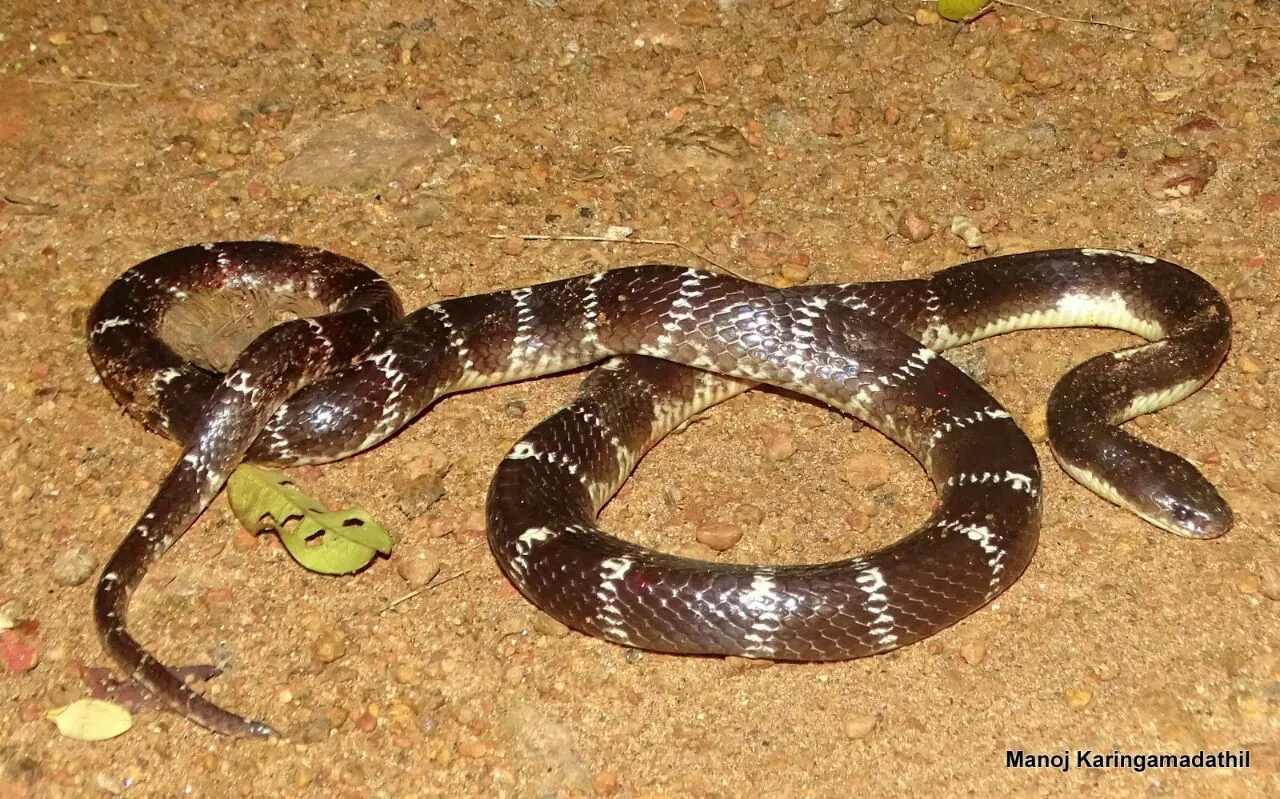
| Common krait (Bungarus caeruleus) | Glossy black with thin paired white bands | Inside homes at night, near rodents | Nerves, often with little pain |
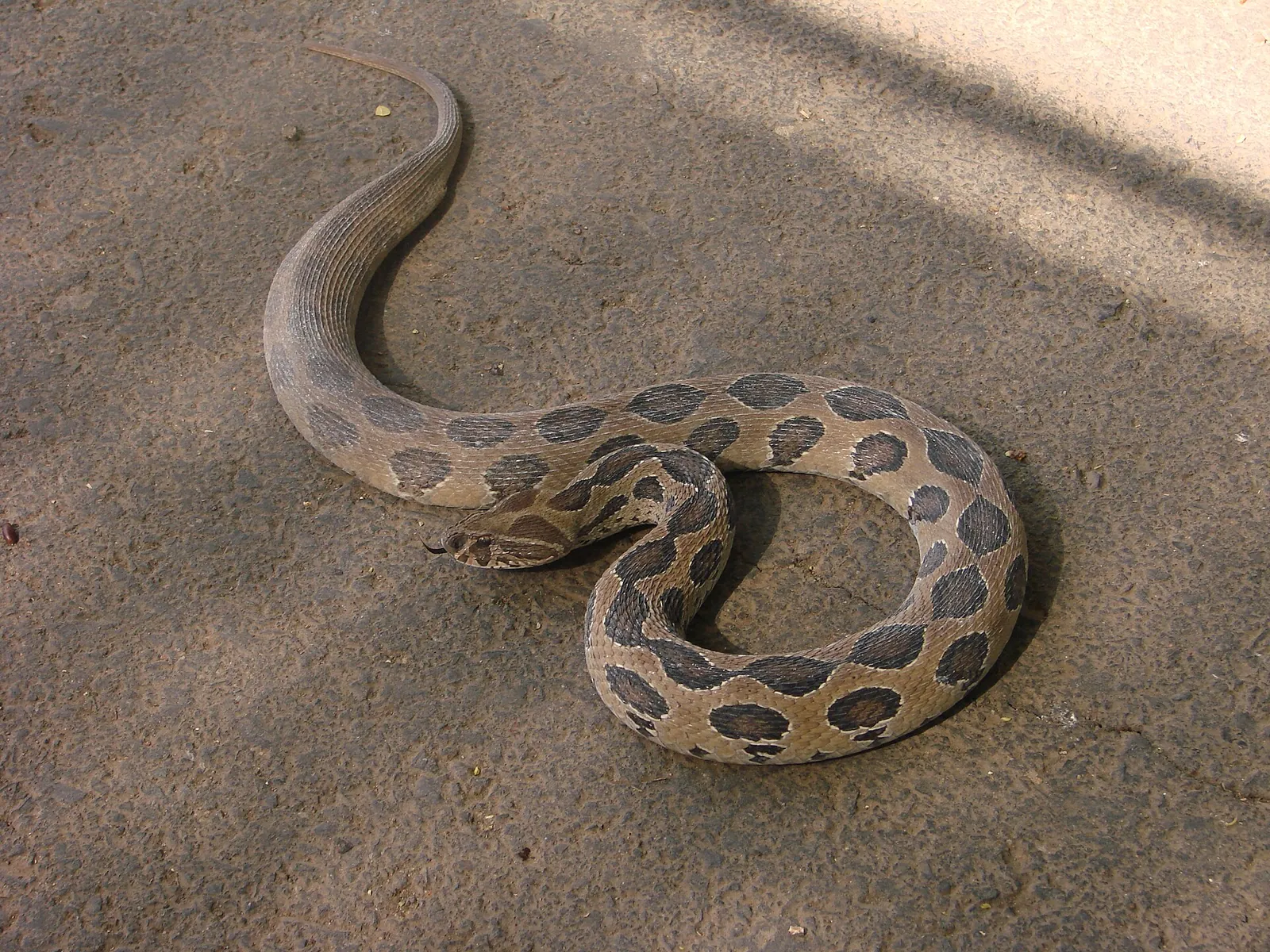
| Russell's viper (Daboia russelii) | Thick body, three rows of dark brown oval spots with pale edges | Farmland, grassland, scrub | Blood clotting and kidneys |
| Saw-scaled viper (Echis carinatus) | Small, sandy-brown, white zigzag pattern, rough scales | Dry rocky and sandy ground, under stones | Blood clotting |
Colour varies a lot between regions, so treat this table as a guide and never as a reason to handle a snake. A photo taken from a safe distance is far more useful to a doctor than a guess.
Spectacled cobra
When threatened, a cobra lifts the front part of its body and spreads a hood. The spectacle mark on the back of the hood is common but not always present, and some cobras are almost plain brown or black. Cobras hunt rats and toads, which is why they turn up in grain stores, poultry sheds and old walls.
After a cobra bite there is usually pain and swelling around the bite, sometimes with blistering and darkening of the skin. Nerve symptoms such as heavy eyelids, slurred speech and trouble swallowing can follow, and breathing may weaken.
Common krait
The krait is the quiet one. It is active at night, comes indoors after rodents and lizards, and often bites people sleeping on the floor. The bite may barely hurt and leave hardly any mark, while symptoms like abdominal pain, drooping eyelids and weakness appear hours later. Anyone in a krait area who wakes with these signs needs a hospital immediately, even if nobody saw a snake.
Russell's viper
This is a heavy, slow-looking snake with a flattish triangular head and three rows of chain-like oval spots running down its body. When disturbed it gives a loud, long hiss, which is a warning worth respecting. It lies in grass and crops, so bites often happen to the feet and legs of people working in fields.
Its venom affects blood clotting. Signs include fast, painful swelling, bleeding from the bite or gums, blood in urine, and reduced urine output, which can mean the kidneys are under strain. Hospitals often check whether blood clots normally in a simple test tube to decide treatment.
Saw-scaled viper
Small enough to hide under a stone or in a crack of dry soil, the saw-scaled viper is common in parts of Maharashtra, Rajasthan, Gujarat, Karnataka, Tamil Nadu and other dry regions. When threatened it coils into a figure-of-eight shape and rubs its rough scales together, making a rasping, sizzling sound. Its bite also affects clotting, and bleeding can start some time after the bite, so even a small bite from a small snake needs hospital care.
Snakebite first aid: what to do
Indian snakebite guidance is often taught with the memory aid 'Do it R.I.G.H.T.': Reassure the person, Immobilise the limb, Go to hospital, and Tell the doctor about any symptoms. In practice that means:
- Move the person away from the snake, and keep them calm and lying still. Fear speeds up the heart and makes it harder to think clearly.
- Take off rings, watches, bangles, toe rings and tight clothing near the bite before swelling starts.
- Keep the bitten arm or leg still with a splint, a stick and cloth, or a folded newspaper. Do not let the person walk on a bitten leg if you can carry them or bring transport.
- Call 108 or the nearest ambulance, or take the person by any vehicle to a hospital that has anti-snake venom. A district hospital or community health centre is usually the right first stop.
- Note the time of the bite and watch for changes on the way: vomiting, drooping eyes, bleeding, difficulty breathing.
What not to do after a snakebite
| Common practice | Why it is harmful |
|---|---|
| Tying a tight tourniquet or rope | Can cut off blood supply and damage the limb, and releasing it can make things worse |
| Cutting the bite with a blade | Causes bleeding and infection; it does not remove venom |
| Sucking out the venom | Does not work and puts the helper at risk |
| Applying ice, herbs, cow dung or chemicals | No benefit, and may cause burns or infection |
| Going to a faith healer first | Loses the hours when anti-snake venom works best |
| Trying to catch or kill the snake | Leads to a second bite; a phone photo is enough |
Do not give alcohol or painkillers you have at home unless a doctor tells you to. The hospital team will decide on medicines.
Anti-snake venom at government hospitals
Polyvalent anti-snake venom, often written as ASV on hospital boards, is produced in India against these four snakes. Government hospitals and many primary and community health centres keep it, and treatment there is generally free or inexpensive. Stock and staff training differ between places, so if you live in a rural or semi-rural area, it is worth asking your local health centre now whether it keeps ASV and where the nearest backup hospital is. Write that information down near the phone.
Doctors decide on the dose by watching symptoms and test results, not by how big the snake looked. People sometimes need to stay for observation for a day or more even if they feel fine, because some effects appear late.
Reducing the chance of a bite
Most prevention is about where you put your hands and feet. Use a torch at night, wear shoes or gumboots in fields, use a stick to check grass before stepping in, and lift stones and logs towards you so that anything underneath escapes away from you. Around the home, control rodents, seal gaps under doors and keep woodpiles away from walls. Our article on keeping snakes away during the monsoon goes into the house side in more detail, and families with small children will find practical habits in pest safety tips for families with children and pets.