You moved into a newly painted flat, or the monsoon set in, and now there are hundreds of tiny pale specks crawling on the wall, along the window frame and across the pages of your books. They are most likely booklice. To get rid of booklice on a wall, you do not need strong chemicals. You need to dry the air and the surface they feed on. They live on microscopic mould, so once humidity drops and the mould goes, they die out, usually within a few weeks.
What booklice are
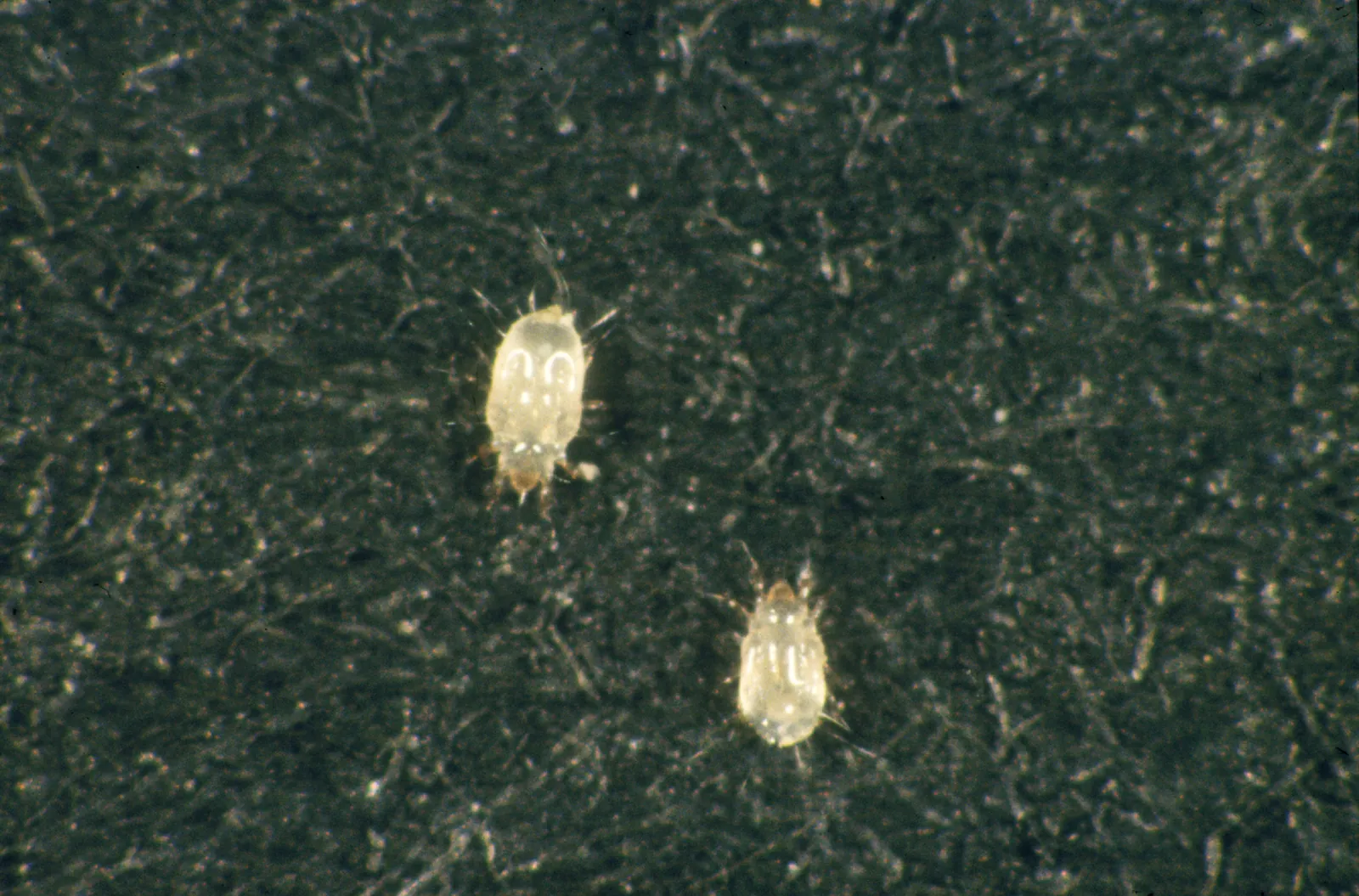
Booklice are tiny insects, usually under 2 mm long, pale cream to light grey, with a relatively large head. They are not true lice and do not bite people or live on pets. The common household ones belong to a group called psocids, and many indoor species are in the genus Liposcelis. They crawl rather slowly and often look like moving dust. Most indoor booklice are wingless.
They feed on mould, fungi and starchy material: the thin film of mould on damp plaster, the glue in book bindings, the starch on paper, and mouldy grains or cereals. That is why they turn up in new buildings, damp rooms and old book collections.
Why they appear on walls
Freshly built or freshly plastered walls hold a lot of water for weeks or months. Paint over damp plaster traps that moisture, and a fine layer of mould grows that you cannot see. Booklice arrive, often carried in on cardboard, furniture or building material, and multiply quickly on that film. In older homes, the same thing happens on walls near a leak, behind wardrobes against an outer wall, in bathrooms without exhaust fans and in rooms closed for weeks.
Monsoon makes it worse almost everywhere. Booklice do best in humid air and struggle to survive in dry conditions. When indoor humidity stays high, a few become thousands.
Signs that you have booklice and not something else
| What you see | Booklice | Similar-looking pest |
|---|---|---|
| Tiny pale specks moving on a wall | Yes, slow crawling | Springtails jump when touched; mites are smaller and often reddish |
| Specks on book pages and between leaves | Yes | Silverfish are much larger and silver |
| Insects in flour, cereal or packaged food | Yes, in damp or mouldy stock | Flour beetles are reddish-brown and hard-bodied |
| Insects on bed or skin with bites | No, booklice do not bite | Bed bugs, fleas or bird mites |
| Insects in a cluster near a window frame or AC | Possible, if damp | Bird mites if a pigeon nest is near |
How to get rid of booklice on walls, step by step
- Find the moisture source. Look for leaks, a wet wall shared with a bathroom, condensation on windows, or wet laundry dried indoors.
- Ventilate daily. Open windows when it is not raining, run exhaust fans in bathrooms and kitchens, and keep air moving with fans.
- Dehumidify if needed. In monsoon, an air conditioner on dry mode or a dehumidifier in the worst room makes a big difference. Aim to keep the room feeling dry rather than clammy.
- Wipe and vacuum. Vacuum the wall, skirting and window frames, then wipe with a cloth lightly dampened with diluted dish soap or a mild disinfectant. Dry the surface afterwards.
- Move furniture off outer walls. Leave a gap of a few centimetres behind wardrobes and beds so air can circulate.
- Remove damp cardboard and paper. Boxes stored on the floor and old newspapers are breeding spots.
- Repeat for two to three weeks. Numbers fall as the surface dries.
If the wall is new, be patient. Plaster dries over a full season, and booklice usually vanish once it does. Our article on why new homes still get pests explains why fresh construction attracts several damp-loving insects.
Booklice in books and food
For books, take them off the shelf, brush the edges outside, and leave them in a dry, airy room, out of harsh direct sun which fades covers. Do not store books against an outer wall or in a closed cupboard in monsoon. Badly infested books can be sealed in a plastic bag and kept in a freezer for about a week, then left in the sealed bag to come back to room temperature before opening, so moisture does not condense on the pages.
For food, throw away any packet where you see booklice, wipe the shelf, and store dry goods in airtight jars. Booklice in food usually mean the food or the shelf has picked up moisture.
For a closer look at a related pest that also loves damp paper, see our guide to silverfish and booklice.
Cheap ways to check if the room is too damp
You do not need special equipment, though a small digital hygrometer from an electronics shop costs little and removes the guesswork. Without one, look for clues. Salt that clumps in its jar, biscuits that go soft within a day of opening, a musty smell when you open a cupboard, water beads on the inside of window glass in the morning, and clothes that feel faintly damp even after drying are all signs that the air is holding too much moisture. A wall that feels cold and slightly sticky to the touch, or paint that is bubbling, usually means water is coming through from inside the wall.
If a hygrometer shows the room staying very humid most of the day during monsoon, run the AC on dry mode for a few hours, or use a dehumidifier, and check again after a week. You should see fewer booklice as the reading comes down.
Do insecticides help?
Usually not much, and not on their own. Spraying a damp wall kills the booklice on it today, but new ones hatch from eggs in the mould film and the wall stays damp. You end up spraying repeatedly in a living room or bedroom for no lasting gain. A professional may use a light crack and crevice treatment in severe cases, such as a library or warehouse, but in a home, drying the space is the treatment. We would rather you spend money on an exhaust fan or a plumber than on repeated sprays.
What drying will not fix
If the dampness comes from a structural leak, a cracked pipe inside the wall, or seepage from the terrace or the flat above, ventilation only helps partly. You need the leak repaired, and in a society building that may mean taking it up with the committee. Until the water stops, booklice, mould, silverfish and even termites will keep returning to that wall.
Booklice are not known to spread disease. Large numbers can add to dust and may bother people with allergies or asthma, so if anyone at home has worsening symptoms in a damp room, deal with the mould and see a doctor if symptoms continue.