You pull an old school textbook or a family Ramayan off the shelf and find small round holes running through the pages, or scraped, ragged patches on the cover. Is it bookworm or silverfish? The pattern tells you. Neat round holes tunnelling deep through many pages are made by the larvae of small beetles, which people call bookworms. Irregular surface damage, thinned paper, nibbled edges and chewed glue on the spine are the work of silverfish. They need different responses, so look closely before you act.
There is no single bookworm
Bookworm is not one species. It is a common name for the grubs, or larvae, of several small beetles that bore into paper, board and wood. In Indian homes the usual culprit is the drugstore beetle, a tiny reddish-brown beetle whose larvae also eat spices, biscuits and dried herbs. Furniture beetles and related wood borers can also tunnel into books with wooden boards or stored in wooden cupboards. Booklice are sometimes wrongly called bookworms too, but they only graze on mould and leave little visible damage.
Adult beetles are only 2 to 4 mm long. The damage is done by the larvae inside the book, which you rarely see until you open the pages.
Silverfish: the surface grazer
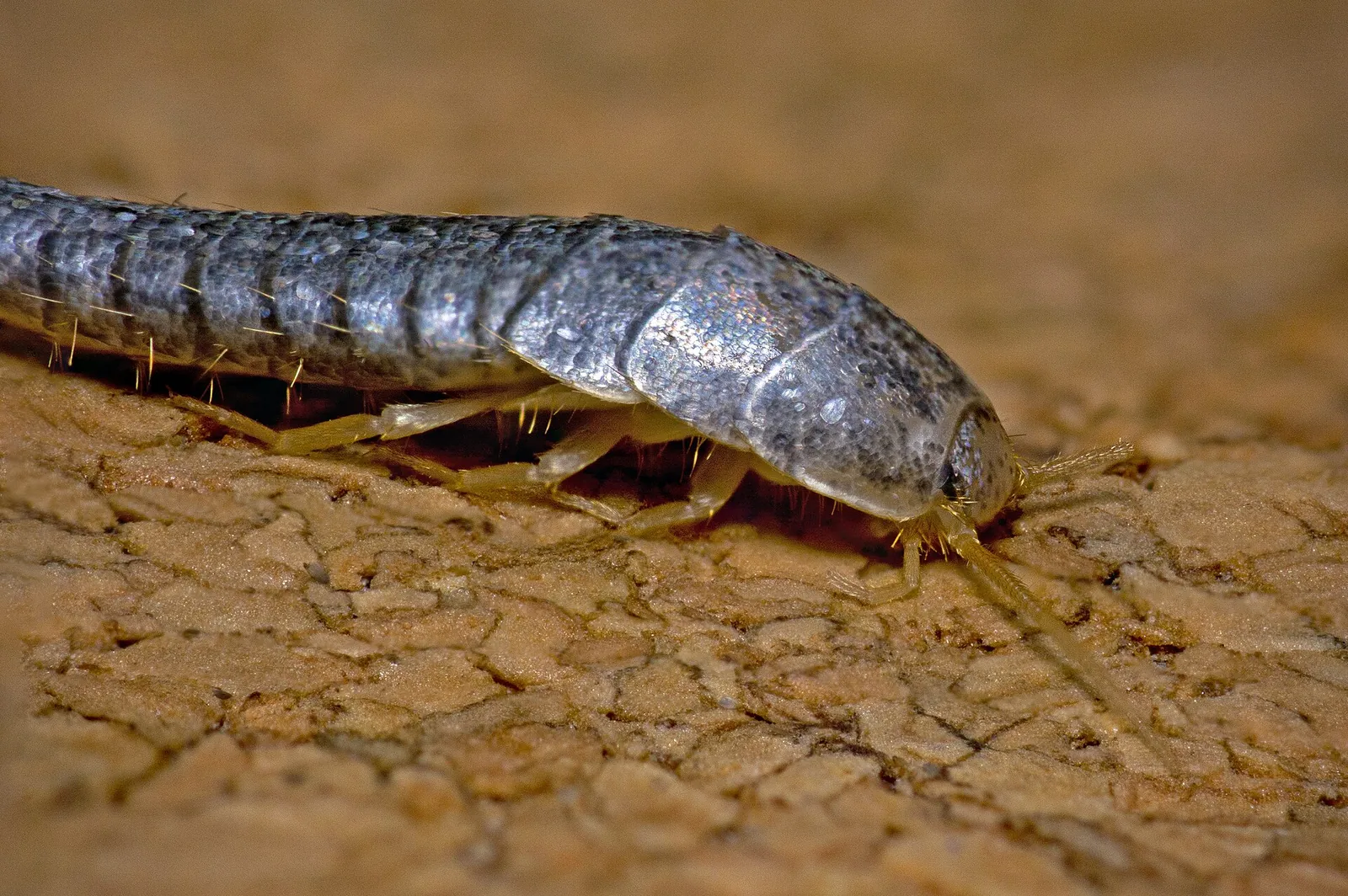
Silverfish are wingless, carrot-shaped insects about 1 to 2 cm long, covered in shiny silver-grey scales, with three tail bristles at the back. They move fast with a wriggling motion and hide in dark, humid gaps during the day. They eat starch, sugars and protein: book glue, paper sizing, photographs, wallpaper paste, cotton and silk clothing, and even dandruff and crumbs.
They do not tunnel. They scrape at the surface, so the damage is shallow and patchy. Silverfish are especially common in humid coastal cities and during the monsoon, and they love bathrooms, almirahs and shelves against an outer wall.
Bookworm vs silverfish: the side-by-side
| Sign | Bookworm (beetle larvae) | Silverfish |
|---|---|---|
| Shape of damage | Small round holes and tunnels through many pages | Irregular scraped patches and nibbled edges |
| Depth | Deep, through the text block and covers | Surface only, often on covers and spine |
| Powder | Fine dust, called frass, falls out of holes when the book is tapped | Little powder; tiny dark droppings like pepper |
| Insect you see | Rarely; maybe tiny brown beetles near a window or light | Silver wriggling insect when you move books |
| Other clues | Same beetles in spices, biscuits or a wooden cupboard | Yellowish stains, shed scales, damage to photos and clothes |
| Main cause | Infested book, food or wood brought in | High humidity and dark undisturbed storage |
How to protect books from silverfish
- Lower the humidity. Keep book cupboards ventilated, open them every few days, and avoid placing shelves against damp outer walls.
- Clean regularly. Dust and vacuum shelves every few weeks. Silverfish feed on dust, crumbs and dead insects as well as paper.
- Leave a gap. Keep a small space between the books and the back panel so air moves.
- Avoid cardboard storage. Use plastic boxes with lids for papers and photographs you do not handle often, with a silica gel sachet inside in monsoon.
- Check new arrivals. Old books from a raddiwala, a library sale or a relative's attic can carry silverfish and beetles.
- Do not use naphthalene balls. They are a health hazard in closed spaces, especially for children, and are not a reliable silverfish control.
If silverfish are everywhere and not only on books, our guide to silverfish and booklice covers treating the whole home.
How to save a book with bookworm damage
- Separate the infested book from others at once, so the larvae do not move on.
- Tap it gently over a sheet of white paper. Fresh, light-coloured powder means larvae are still active.
- Seal the book in a plastic zip bag, squeeze out the air, and place it in a home freezer for about a week.
- Take the bag out and let it reach room temperature for a day before opening, to avoid condensation on the pages.
- Brush loose powder away with a soft brush. Do not spray insecticide onto pages; it can stain and does not reach larvae deep inside.
- Check the rest of the shelf and the kitchen for the same beetles, especially old spices and biscuits.
Freezing is widely used by libraries and archives to kill insects in paper. For a rare, fragile or valuable volume, ask a book conservator before freezing.
Other paper damage that is not insects
Not every damaged book has a pest problem. Brown spots scattered across pages, often called foxing, come from humidity, fungus and the chemistry of old paper, not from insects. Pages that crumble at the edges are usually just acidic paper ageing. Large chewed corners with ragged tooth marks, along with droppings the size of a rice grain, point to rats or mice rather than insects. Wavy, stuck-together pages mean the book got wet. And a fine black or green fuzzy growth on a cover is mould, which also attracts booklice. Each of these calls for a different response: drier storage for foxing and mould, rodent proofing for chewed corners, and careful drying for water damage.
Looking at the damage for a minute before reaching for any product saves you from treating a problem you do not have.
A simple test helps when you are unsure. Lay a few sheets of black paper on the shelf overnight with the books pulled slightly forward. In the morning, silverfish scales leave a faint silvery dust, beetle frass shows as small heaps of pale powder, and rodent droppings are obvious. If the paper is clean after several nights, the damage is probably old and the pest has already gone.
When the shelf itself is the problem
If you see tiny holes in a wooden bookcase, fine powder below it, or the same beetles coming out of the wood, the borers may be in the furniture rather than the books. That needs wood borer treatment, usually injecting an insecticide into the holes, and is different from termite work. Termites leave mud tubes or pellets and hollow wood behind a painted surface; read our guide to drywood and subterranean termites if you are unsure. A termite problem in a bookshelf is far more serious than silverfish and needs a professional.
An honest word on treatment
For most home libraries, no spray is needed. Silverfish respond to lower humidity, regular cleaning and fewer hiding places, and bookworm damage stops when you freeze or discard the infested books and clear old food stock that keeps the beetles breeding. A professional general treatment, typically ₹1,200 to ₹2,500 for a 2BHK in 2026 as a range, helps when silverfish are throughout the home, but it will not undo damage already done or keep books safe in a damp almirah.