A pest control quotation template needs eleven parts: your header, a quote number and validity date, the customer and site details, a short summary of what you found, the scope of work, a line-item price table, taxes, visit schedule, warranty terms, exclusions and customer responsibilities, and an acceptance block. Leave any of them out and you invite either a lost deal or an argument after the job. This article walks through each line of a quote template, explains what to write and why, and ends with a filled example.
If you want the selling side, such as follow-up timing and how to present options, our earlier post on creating quotations that win clients covers that. Here the focus is on the document itself.
Line 1: Header and business details
Logo, legal business name, address, phone, email and website. In India add your GSTIN; in the US, many operators add their state pest control licence number. Keep it to a narrow band at the top. A header that takes a third of the page pushes the price, the part customers look for first, onto page two.
Line 2: Quote number, date and validity
Give every quote a unique number, such as Q-2026-0317, and a date. Add a validity line: 'This quotation is valid for 30 days.' Chemical costs and technician wages change, and an old quote resurfacing eight months later at last year's rate is a common headache. Thirty days suits most residential work; for large tenders, match the validity the client asks for.
Line 3: Customer and site details
Customer name, contact person, phone and billing address, plus the service address if different. For commercial clients, add their GSTIN and any purchase-order reference they need on later invoices. Describe the site clearly: '3BHK flat, 1,250 sq ft carpet, 7th floor' or 'Restaurant kitchen and store, approx. 900 sq ft'. Size and type justify the price.
Line 4: What we found
Two to four sentences from the inspection. 'German cockroach activity in kitchen cabinets and behind refrigerator; light ant trails on balcony; no termite signs observed in door frames checked.' This proves you looked properly, and it frames the scope that follows. If you did not inspect, say the quote is based on the customer's description and may change after the first visit.
Line 5: Scope of work
State exactly what will be done, where and how, in plain language.
- Pests covered: cockroaches, ants, spiders, silverfish.
- Areas: kitchen, two bathrooms, living room, bedrooms, balcony.
- Method: gel baiting in kitchen and cabinets; targeted residual spray along skirting and drains; no spray on beds or food surfaces.
- Visits: four visits over 12 months.
Avoid 'complete pest control' or 'all pests'. Customers read that as including rats, termites and bed bugs, and you will be asked to deliver them for free.
Line 6: The price table
Show each service as its own line with quantity, rate and amount. Prices below sit inside typical 2026 market ranges and are only an example.
| # | Service | Qty | Rate | Amount |
|---|---|---|---|---|
| 1 | Annual pest management contract, 3BHK, 4 visits | 1 | ₹5,800 | ₹5,800 |
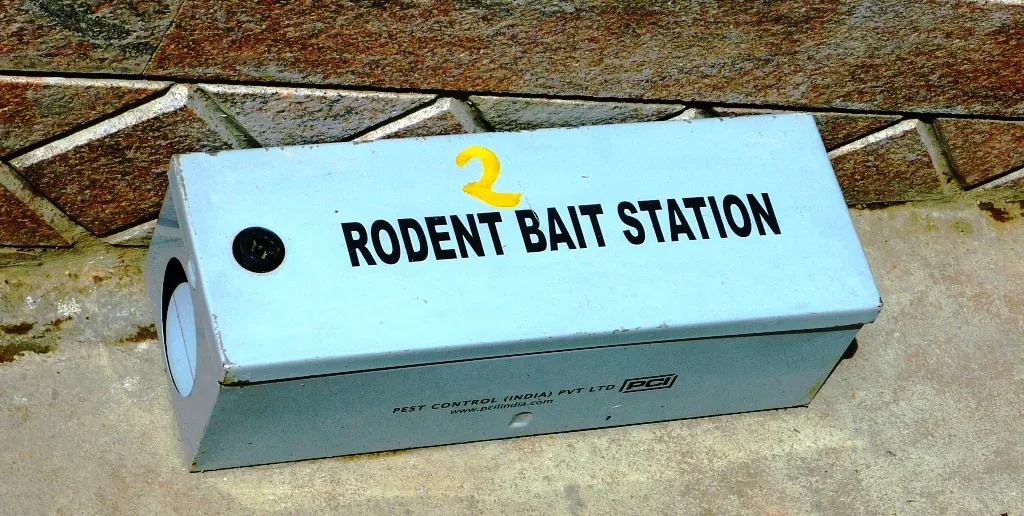
| 2 | Rodent control, flat, 2 visits with bait stations | 1 | ₹2,200 | ₹2,200 |
| 3 | Optional: post-construction termite treatment, 3BHK (drilling) | 1 | ₹14,500 | Optional |
| Subtotal (lines 1-2) | ₹8,000 | |||
| GST 18% (CGST 9% + SGST 9%) | ₹1,440 | |||
| Total | ₹9,440 |
Mark optional lines clearly and keep them out of the total. Customers like being able to add termite work later without asking for a new quote. Metro prices usually sit at the top of typical ranges and smaller cities lower, so adjust to your market; our article on pricing for profit explains how to build the rates.
Line 7: Taxes
State the tax basis explicitly, for example 'Prices exclusive of GST at 18%' or 'Prices inclusive of GST'. In India, pest control is commonly billed at 18 percent under SAC 998531, but confirm current rates with your CA. In the US, add a sales tax line only where your state applies it. Ambiguity here is the most common cause of a customer feeling cheated at invoice time.
Line 8: Visit schedule and payment terms
List planned visit months or a rule such as 'every three months from the first service date'. Then the payment terms: 'Full payment on first visit', '50 percent advance, balance after second visit', or 'Monthly invoices payable within 15 days'. Add accepted payment methods. Commercial clients appreciate this because their accounts team can plan.
Line 9: Warranty and service guarantee
Say what happens if pests return. 'Free call-back service between scheduled visits within the contract period' is common for AMCs. For termite work, state the warranty period and what it covers: re-treatment of affected areas, not repair of damaged wood. Our guide to termite warranty and AMC terms shows what customers expect.
Line 10: Exclusions and customer responsibilities
- Excluded: termites, bed bugs, mosquitoes and rodents unless listed above.
- Excluded: repair of structural damage, carpentry or civil work.
- Customer to empty kitchen cabinets before the first visit and keep pets away during treatment.
- Customer to fix plumbing leaks and seal gaps recommended in our report; warranty may not apply where these are ignored.
- Access: visits rescheduled more than twice by the customer may be counted as completed, as agreed.
Keep this list short and fair. A wall of legal terms makes small customers suspicious. Commercial clients may send their own terms; read them, since some include penalties for missed visits.
Line 11: Acceptance
End with a simple acceptance line: name, signature, date, and preferred start date. For digital quotes, an 'Accept' button or a WhatsApp reply of 'Approved' saved against the quote works too. The acceptance date matters because it is when your contract terms start.
Residential and commercial versions side by side
| Section | Residential quote | Commercial quote |
|---|---|---|
| Length | One page, two at most | Three to six pages plus annexures |
| Findings | Two or three sentences | Inspection summary with zone-wise notes and photos |
| Scope | Pests, rooms, method, visits | Pests, zones, device counts and layout, frequency, reporting |
| Pricing | Package price with add-ons | Monthly fee, per-device or per-zone rates, call-out charges |
| Compliance | Safety note for children and pets | Products list, licences, insurance, audit documentation offered |
| Acceptance | Signature or WhatsApp approval | Purchase order and signed agreement |
Starting from the right version saves time and avoids sending a food factory a quote that reads like a flat package.
What a template will not do for you
A template cannot make a careless inspection accurate. If the technician missed termite tubes in the store room, the quote is wrong no matter how well laid out it is. Also, the same template will not suit a fifty-flat society tender and a single bedroom bed bug job without adjustment; keep a short residential version and a longer commercial version. Software such as PestVyapar can hold both as templates and fill in customer details automatically, but the eleven lines above are what matter whatever tool you use.