Mumbai flats have a pest problem that has very little to do with how clean you keep your kitchen. The city sits on reclaimed land at sea level, its storm drains discharge against an incoming tide for several hours each day, and roughly two-thirds of its housing shares vertical plumbing shafts between flats. Those three facts explain most of what crawls out of your bathroom floor trap at midnight.
This guide covers what a Mumbai household is realistically dealing with across Andheri, Dadar, Borivali, Chembur and the island city, what treatment should cost in 2026, and which parts of the problem your operator genuinely cannot solve alone.
The sea-level drainage problem nobody mentions in the quote
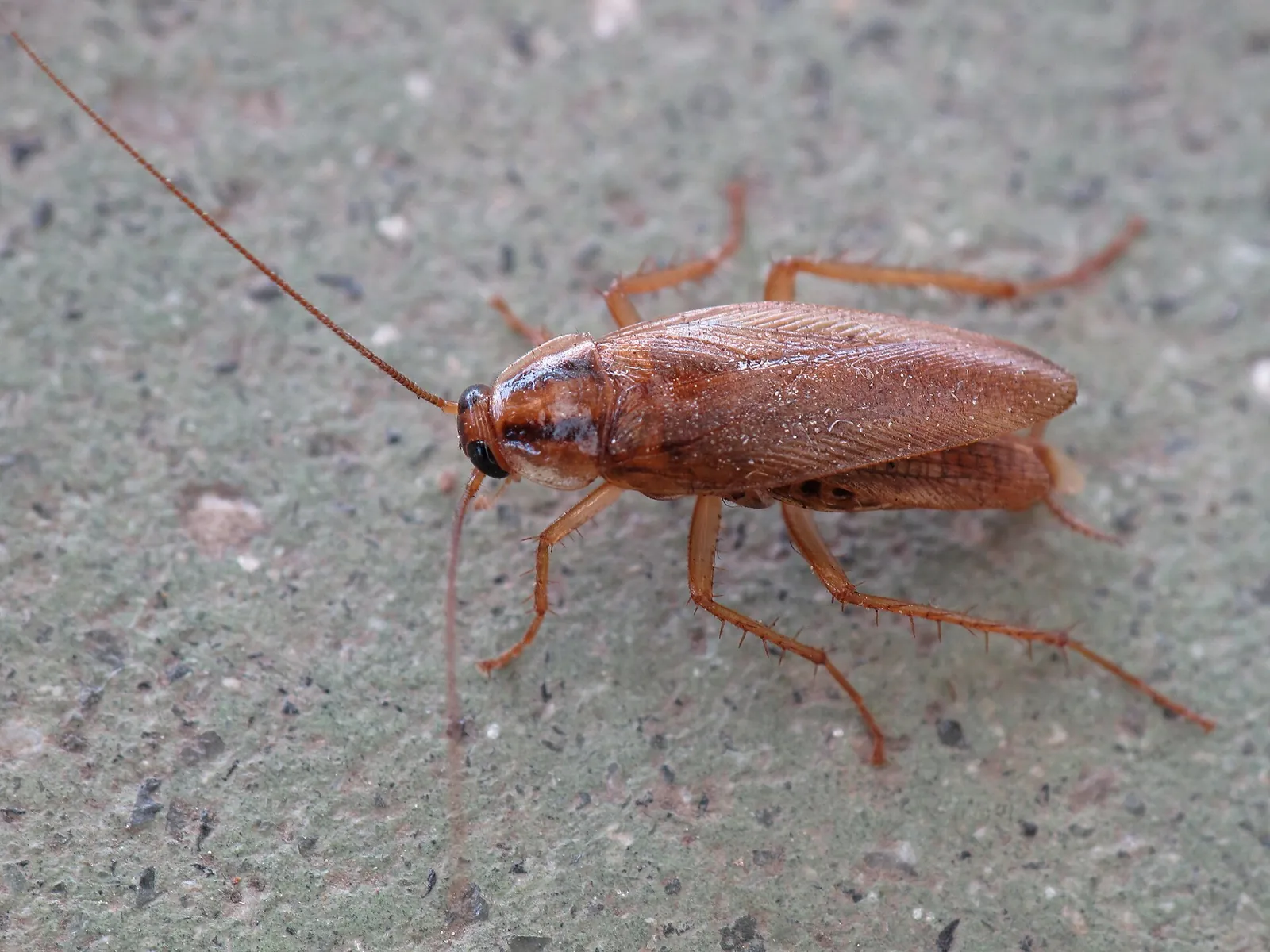
Between roughly 11 in the morning and mid-afternoon on a spring tide, several of Mumbai's outfalls cannot discharge. Water backs up inside the sewer network. Anything living in that network — chiefly Periplaneta americana, the large reddish-brown American cockroach, and Rattus norvegicus, the brown sewer rat — is pushed upward looking for air. The nearest air is your floor trap.
That is why a Bandra flat on the eighth floor gets cockroaches at the same rate as a ground-floor shop. Height is irrelevant when the pest is travelling inside a pipe. Sealing the annular gap — the ring of open space where the soil pipe passes through your slab — does more for a Mumbai kitchen than any amount of spraying.
Building type changes everything here
Mumbai has at least four distinct housing stocks and each one fails differently.
| Building type | Dominant pest issue | What actually helps |
|---|---|---|
| 1960s-80s society building | American cockroach via shared risers; rats in ducts | Riser-wide drain dosing on all floors on the same day |
| Chawl / ground-plus-two | Rodents, bed bugs, house flies | Rodent proofing at plinth level plus community waste timing |
| New high-rise with podium parking | Mosquitoes in podium sumps, ants on upper floors | Larvicide in fire tanks and sumps; ant gel at expansion joints |
| Redeveloped tower on a slum rehab plot | Cockroaches plus stored-product pests | Sealing the shaft cladding gaps builders leave behind |
| Ground-floor shop or restaurant | Rats, drain flies, German cockroach | Monthly bait station line plus grease trap cleaning |
If you live in a redeveloped tower and were told the building is new so pests should not be an issue, that is wrong. New towers on old plots often inherit the drainage alignment of what stood there before.
German cockroaches in Mumbai kitchens are an imported problem
Blattella germanica is the small tan cockroach with two dark stripes behind the head. It does not live in Mumbai sewers. It arrives inside cartons, in the motor housing of a second-hand refrigerator, in a microwave delivered from a warehouse, or in the crate of a home-delivered grocery order. One gravid female carries an ootheca holding around 30 to 40 eggs and can produce several in her lifetime, so a single unnoticed arrival becomes a kitchen-wide problem in about eight weeks.
Spraying this species is counterproductive. Pyrethroid spray triggers dispersal, so the population you could have baited in one cabinet spreads into three rooms. Gel baiting placed as many rice-grain-sized dots inside hinge recesses, under the sink and behind the fridge motor is the correct answer.
Mosquitoes: what a Mumbai balcony is actually breeding
Aedes aegypti needs clean, still water and around eight to ten days from egg to biting adult at Mumbai's June to September temperatures of 27 to 31 degrees. The species prefers small artificial containers, which is why a money plant bottle on your windowsill matters more than the nullah outside.
- Air-conditioner drip trays on the ledge, especially split units in bedrooms.
- The saucer under a tulsi pot, refilled every time it rains.
- Overhead tank inspection covers that no longer sit flush.
- Tarpaulin folds on scaffolding of any building under repair next door.
- Fire-fighting sumps in podium parking, which nobody inspects between drills.
Culex quinquefasciatus, the noisier night biter, prefers dirty water and breeds in choked nullahs and septic overflow. It causes far more sleepless nights than Aedes but does not carry dengue. Knowing which one you have decides whether the fix is inside your flat or a letter to the ward office.
What Mumbai pest control costs in 2026
These are the ranges a resident should expect from a licensed operator carrying CIB and RC approved products. Suburban rates run at the lower end, south Mumbai and Bandra West at the upper.
| Service | 1 BHK | 2 BHK | 3 BHK / duplex |
|---|---|---|---|
| General disinfestation, one visit | ₹1,100 - ₹1,900 | ₹1,700 - ₹2,900 | ₹2,600 - ₹4,200 |
| German cockroach gel, single visit | ₹900 - ₹1,600 | ₹1,300 - ₹2,300 | ₹2,000 - ₹3,400 |
| Bed bug treatment, two visits | ₹2,800 - ₹5,000 | ₹4,200 - ₹7,500 | ₹6,500 - ₹11,000 |
| Anti-termite, post-construction | ₹5,500 - ₹10,000 | ₹8,000 - ₹16,000 | ₹14,000 - ₹26,000 |
| Annual contract, 4 visits | ₹3,800 - ₹6,000 | ₹5,200 - ₹8,500 | ₹8,000 - ₹13,500 |
Society-wide contracts are quoted per flat and typically fall 30 to 45 percent below the individual rate at 60 flats or more, because the crew treats every riser in one mobilisation instead of returning eleven times.
When calling an operator is a waste of your money
An honest list. There are situations where the ₹2,000 you are about to spend will change nothing.
- You see two or three American cockroaches a week and your floor traps are open jalis. Fit self-closing traps first, then judge.
- Your neighbour has an active infestation and refuses treatment. Treating only your flat buys about five weeks.
- The rats are in the society duct, not your flat. This needs a committee resolution, not an individual booking.
- You have a persistent damp patch from a leaking wall above. Termites and silverfish will return until the plumbing is fixed.
- You are seeing flying insects for two evenings after the first heavy rain. Those are alate termites or winged ants swarming; they die within hours and mean nothing on their own unless they are emerging from inside your woodwork.
Timing: book in May, not July
The single most useful piece of scheduling advice for this city. Residual insecticide bonds to a dry surface and holds for eight to twelve weeks. Applied to a wall that already carries monsoon moisture, the same product may lose effectiveness in three. Treatment in the second half of May costs the same as treatment in July and works roughly twice as long.
- Mid-May: drain and chamber dosing across the whole building, terrace outlet clearing.
- Early June: flat-level general treatment and floor trap replacement.
- Mid-July: mosquito larvicide round in sumps, tanks and podium areas.
- September: rodent bait station check as water recedes and burrows dry out.
- January: termite inspection, when mud tubes are easiest to spot on dry plaster.