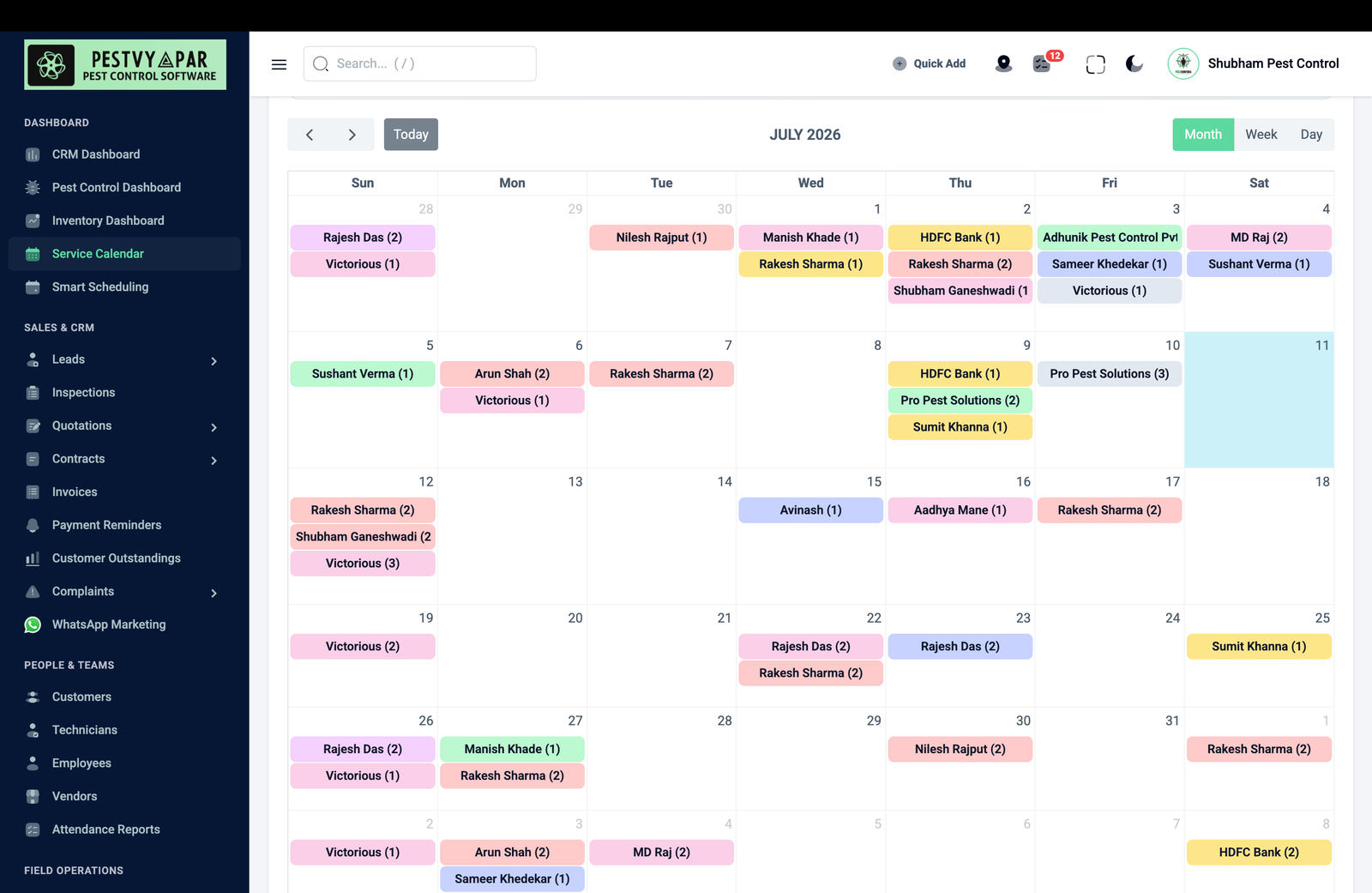
Almost every pest control business starts with a spreadsheet. It is free, familiar, and good enough at first — a list of customers, some dates, a few formulas. But there comes a point where the spreadsheet quietly becomes the thing holding your business back. If you are wrestling with tabs, chasing renewals in your head, and dreading month-end billing, this guide is for you. It explains the signs you have outgrown spreadsheets and how to move to proper pest control software without the pain you fear.
Why spreadsheets work at first — and then do not
A spreadsheet is a fine starting point when you have a handful of customers and do everything yourself. The trouble begins as you grow. Spreadsheets do not remind you of renewals, do not schedule visits, do not generate GST invoices, and cannot be safely used by several people at once. They break silently — one wrong sort, one deleted row, one overwritten formula — and there is no history of what changed. What served you at ten customers becomes a liability at a hundred.
Signs you have outgrown the spreadsheet
You do not need to guess when it is time. These signs make it clear:
- You have missed AMC renewals because nobody was reminded.
- Month-end invoicing takes hours and mistakes creep in.
- You cannot quickly answer "what treatment did this customer last get?"
- Two people editing the sheet overwrite each other's work.
- Technicians in the field cannot see or update anything.
- You are afraid the whole file could be lost or corrupted.
What software gives you that a spreadsheet cannot
Purpose-built pest control software is not just a fancier spreadsheet — it does things a spreadsheet fundamentally cannot. It reminds you of renewals automatically, schedules visits and assigns technicians, generates GST invoices and professional service reports, stores each customer's full treatment history, lets your team and field technicians work together in real time, and keeps your data backed up and safe. In short, it replaces the tasks you were doing manually around the spreadsheet with tasks the software does for you.
A spreadsheet stores your data. Software runs your business. The difference is everything the spreadsheet made you do by hand.
Overcoming the fear of switching
The biggest barrier to moving on is fear — fear that it will be complicated, expensive, or that data will be lost in the switch. In reality, a good vendor helps you import your existing customer list from the spreadsheet, so you are not starting from scratch. You keep the data you already have and simply gain everything the software adds. The transition is far less painful than most owners expect, and the relief of no longer wrestling the spreadsheet arrives quickly.
How to make the transition smoothly
- Tidy your spreadsheet first — clean up the customer list so the import is clean.
- Start with the essentials — import customers and contracts, and set up renewal reminders.
- Move one process at a time — begin with invoicing or renewals, then add scheduling and reports.
- Train your team on the field app early, so technicians adopt it from the start.
- Keep the old sheet as a read-only backup for a while, then retire it once you trust the software.
The payoff: time back and fewer mistakes
The real reward of moving off spreadsheets is not the software itself — it is what you get back. Hours of manual invoicing and renewal-chasing disappear. Costly mistakes and missed renewals stop happening. You gain a clear view of your business and the confidence that nothing is slipping through the cracks. That freed-up time and mental space is what lets you focus on serving customers and growing, instead of fighting a spreadsheet that has quietly become a second job.
The hidden risks of staying on a spreadsheet too long
Beyond the daily friction, there are quiet risks in a spreadsheet that owners rarely think about until they are burned. The biggest is data loss: a single file, often on one computer or one person's laptop, holding your entire customer base, contract history, and dues. One corrupted file, one failed hard drive, one accidental deletion, or one departing employee who had the only copy, and years of business information can vanish. Unlike proper software with automatic backups, a spreadsheet offers no safety net — and the day you lose it is the day you realise how much your business depended on it.
There is also a subtler risk: a spreadsheet keeps you from seeing your business clearly. Because it cannot easily show you your renewal rate, your outstanding dues, your busiest customers, or your monthly trends, you end up running on gut feeling instead of facts. Decisions about pricing, hiring, and growth get made blind. Software turns that same data into a picture you can actually read and act on. So staying on a spreadsheet too long does not just cost you time — it costs you the visibility to run the business well and the security of knowing your most important asset, your customer information, is safe. Those are reasons enough to make the move before a crisis forces it.
Frequently Asked Questions
When should I move from a spreadsheet to pest control software?
When you start missing renewals, month-end invoicing takes hours, you cannot quickly find a customer's treatment history, multiple people overwrite each other's edits, or you fear losing the file. These are signs the spreadsheet has become a liability rather than a help.
What can pest control software do that a spreadsheet cannot?
It reminds you of renewals automatically, schedules visits and assigns technicians, generates GST invoices and service reports, stores full treatment history, lets your team and field staff work together in real time, and keeps data backed up — all things a spreadsheet cannot.
Will I lose my data when switching?
No. A good vendor helps you import your existing customer list from the spreadsheet, so you keep the data you already have and simply gain everything the software adds. The transition is far less painful than most owners fear.
How do I switch smoothly?
Clean up your spreadsheet first, import customers and contracts, set up renewal reminders, then move one process at a time — invoicing or renewals first, then scheduling and reports. Train technicians on the field app early and keep the old sheet as a backup until you trust the software.
Is pest control software worth the cost over a free spreadsheet?
For a growing business, yes. The software saves hours of manual invoicing and renewal-chasing, prevents costly missed renewals and errors, and gives you a clear view of the business. The time and mistakes it saves usually outweigh the cost quickly.
What is the main benefit of moving off spreadsheets?
You get time and mental space back. Manual invoicing and renewal-chasing disappear, mistakes and missed renewals stop, and you gain confidence that nothing is slipping through the cracks — freeing you to focus on service and growth.