If you want to start a pest control business in India, the licence that matters most is the one that lets you use insecticides commercially. It is issued under the Insecticides Act, 1968 and the rules made under it, and in practice you apply to your state agriculture department or the office it designates. Around that core licence sit the ordinary business registrations: a legal entity, GST, Shop and Establishment registration and, in some cities, a municipal trade licence.
The exact forms, qualification requirements, fees and processing times differ from state to state and change from time to time. Treat this article as a map of what to ask about, then confirm the current rules with your state agriculture department and a chartered accountant before you spend money.
The core licence: commercial pest control under the Insecticides Act
The Insecticides Act regulates how insecticides are made, sold, stored, distributed and used in India. A business that applies insecticides for customers is treated differently from a homeowner spraying their own kitchen, and needs a licence for that activity. The licensing officer is usually an official of the state agriculture department, sometimes at district level.
Applicants are commonly asked to show the following, though you should check your state list:
- Details of the business, its address and the person responsible.
- A technically qualified person on the team. States often expect a graduate in science with subjects such as chemistry, zoology, entomology or agriculture, or completion of a recognised pest control training course. Ask what your state accepts.
- A storage arrangement for insecticides that is separate from living and food areas, lockable and ventilated.
- The list of products you intend to use, all of which must be registered for that use in India.
- Identity and address proof, and sometimes a site inspection.
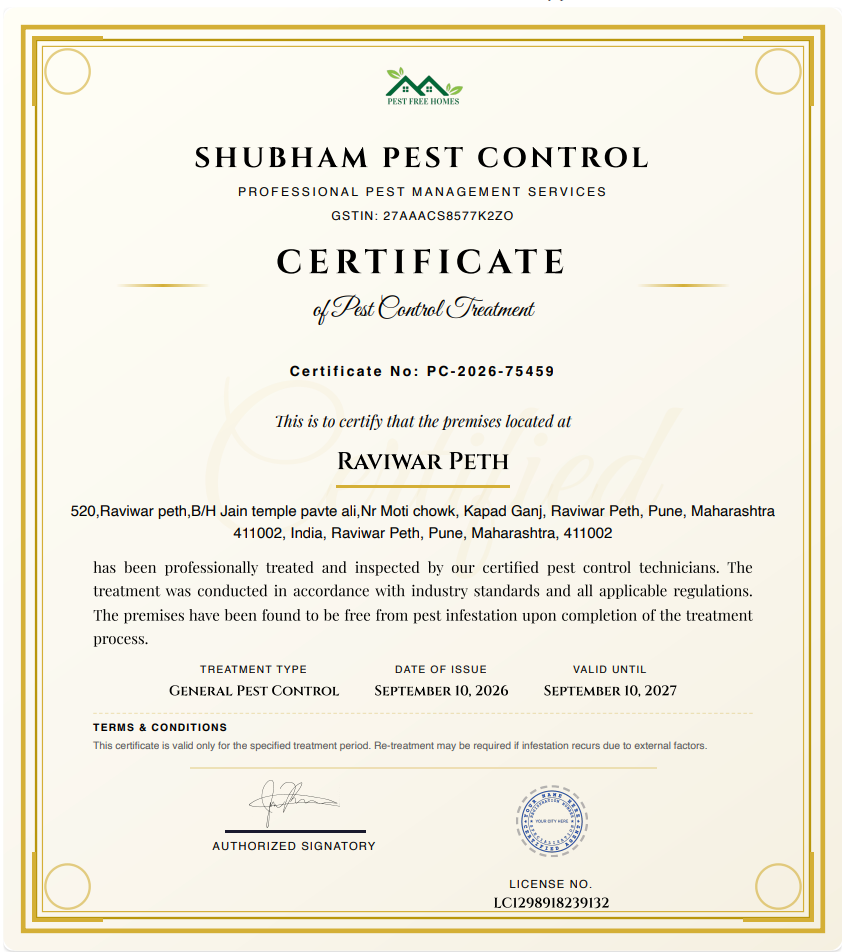
The licence has a validity period and must be renewed. Keep the original safe and carry copies, because commercial clients and auditors will ask for it.
Every registration you are likely to need
| Registration | Who handles it | When you need it | Notes |
|---|---|---|---|
| Pest control licence (Insecticides Act) | State agriculture department | Before you treat for paying customers | Ask for current qualification and storage rules |
| Business entity | Self (proprietorship) or Registrar of Companies (LLP, Pvt Ltd) | From day one | A proprietorship needs no separate registration but needs a bank account and PAN |
| GST registration | GST portal | Mandatory once turnover crosses the threshold; voluntary earlier | Most commercial clients want a GST invoice anyway |
| Shop and Establishment | State labour department or municipal body | When you open an office or employ staff | Rules and names differ by state |
| Trade licence | Municipal corporation | Required in some cities for business premises | Check with your local ward office |
| Udyam (MSME) registration | Udyam portal | Optional | Can help with some tenders and bank schemes |
| Professional tax | State tax department | In states that levy it | Applies to employers and sometimes the business itself |
| EPF and ESIC | Central agencies | Once staff numbers cross the legal thresholds | Confirm current thresholds with a CA |
GST for pest control services
Pest control is a taxable service, and in most cases it is billed at the standard services rate, which has been 18 percent. Below the registration threshold you are not forced to register, but staying unregistered makes it hard to work for companies, hotels, hospitals and societies that claim input credit or simply insist on GST invoices. Many operators register voluntarily from the start for that reason. Rates, thresholds and invoice rules are exactly the kind of detail to confirm with a CA, and our guide to GST billing for pest control businesses covers the invoicing side.
A sensible order to get registered
- Decide your legal structure. A proprietorship is quickest; an LLP or private limited company costs more but separates personal and business liability.
- Get PAN and a current account in the business name.
- Arrange a compliant storage space for chemicals before you apply, since it may be inspected.
- Line up the qualified person or complete a recognised training course.
- Apply for the pest control licence with your state agriculture department.
- Register for GST, Shop and Establishment and any municipal licence.
- Buy chemicals only from licensed dealers, and keep invoices that show product names and batch numbers.
If you change the business from a proprietorship to a company later, check whether the licence needs to be issued afresh in the new entity's name. Licences are usually tied to the holder, not transferable like a phone number.
What clients will ask to see
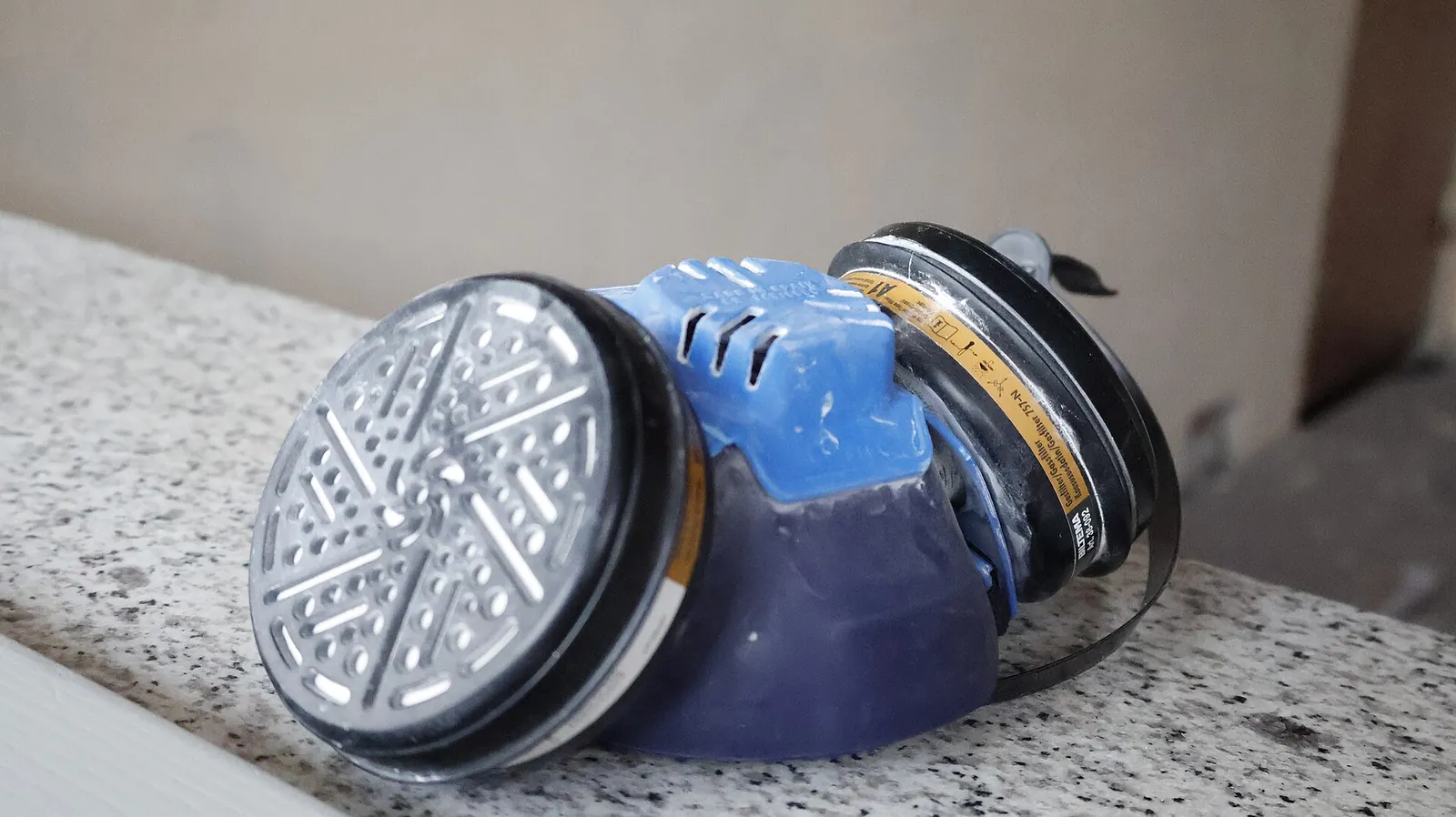
Corporate, food and healthcare clients often send a vendor onboarding form. Expect requests for a copy of your pest control licence, GST certificate, PAN, a list of chemicals with their registration details and safety data sheets, technician training records, PPE practices and sometimes insurance. Having these in one folder, physical and digital, saves you a week on every new commercial account. The safety part ties closely to technician safety and PPE compliance.
What the basic licence does not cover
Some activities need more than the general licence. Fumigation with highly toxic fumigants, such as phosphine-generating products or methyl bromide, is tightly controlled, and fumigation for export consignments involves separate accreditation through the national plant protection authority. If you plan to offer warehouse or export fumigation, research those requirements separately; do not assume your general licence is enough.
The licence also does not make every product legal for every job. Each product is registered for specific pests and situations, and using it outside its label claim can be an offence even if you hold a licence.
Mistakes that cause trouble later
- Working under a friend's or former employer's licence. It may seem harmless, but it leaves you with no legal standing if anything goes wrong.
- Storing chemicals at home next to the kitchen because the office is small.
- Buying unbranded or loose chemical from a market stall with no invoice.
- Letting the licence lapse because the renewal date was in someone's head rather than a calendar.
- Assuming the rules you read online for another state apply to yours.
For the wider picture of starting out, from choosing services to finding first customers, read how to start a pest control business in India. This page is deliberately narrow: it is only about the paperwork.